In the game of politics, timing is everything. We saw this play out yesterday morning with the veto-override shenanigans in the North Carolina Legislature. But there’s a Fayetteville wrinkle to this story, and it’s pretty interesting:
On Tuesday, Mayor Colvin and community activist Val Applewhite came out in full force against the Civil War Museum. They want to hold public meetings, get input, put politicians on the record, and essentially shut the project down.
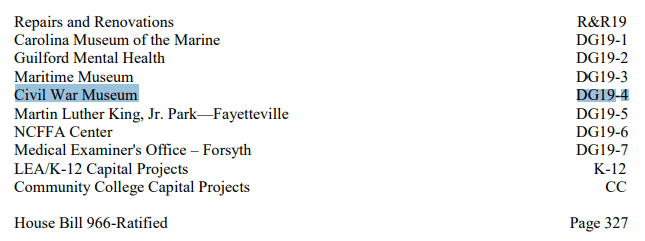
Less than 24 hours later, on Wednesday, Republicans in the N.C. House overrode Governor Cooper’s budget veto in a sneak-attack ploy that made national news. The Fayetteville “wrinkle” comes on page 327 of the Budget Bill that passed:
See that line-item called “Civil War Museum.” Here’s how much money’s heading to Cumberland County if the Senate overrides as well:
Do you think when the Mayor came out against the museum he had any idea that the House would “pass” the budget the next day? I doubt it. But like I said, timing is everything, and the Mayor has flip-flopped on this issue at the absolute worst time. He’s now officially, on the record, against 46 Million Dollars in state money being injected into his community.
Call it bad luck? I don’t know. I’ve been critical of this project in the past as well, but I’ve tried to be consistent from the start. Now we’re left with an economic quandary and a brewing racial battle, and we haven’t even laid a brick. It reminds me of a song from middle school:
For over a year, I have been critical of Fayetteville’s downtown development deal with Prince Charles Holdings because it uses public tax dollars to benefit one corporation. I’m in favor of public money being used for public facilities (like baseball stadiums). I don’t support using public money to build parking decks for private companies. If you’ve read this blog, you’re aware of that by now.
The lines between public and private interests are crucial and go to the heart of what our government should be about, at all levels. In fact it’s written in in the parchment of our state constitution, which bars cities from using tax dollars for private purposes:
ARTICLE V – FINANCE Sec. 2. State and local taxation.
(1) Power of taxation. The power of taxation shall be exercised in a just and equitable manner, for public purposes only, and shall never be surrendered, suspended, or contracted away.
The constitution also prevents special treatment:
N.C. Const., Art. I, Sec. 32. Exclusive emoluments. No person or set of persons is entitled to exclusive or separate emoluments or privileges from the community but in consideration of public services.
Why did our Founders include these provisions? Quite frankly, they were tired of the King of England giving economic favors to those in his favor. A government “of the people” had to live up to its name.
Conflicts of Interest
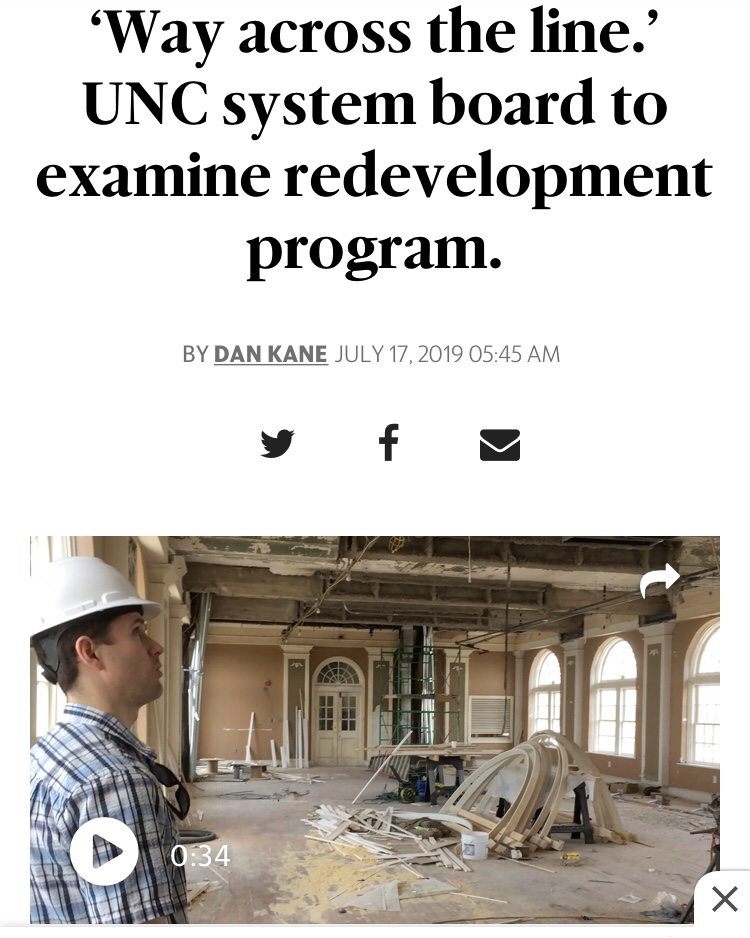
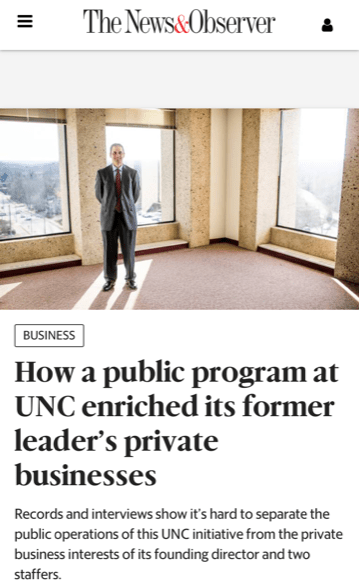
We tend to take these principles for granted until they start to break down. One such breakdown involving Fayetteville’s downtown development deal was described in the cover story in the News and Observer today. The title speaks for itself:
N&O reporter Dan Kane goes into great detail about the formation of Fayetteville’s downtown development project. If you want to know why we have a baseball stadium next to the Prince Charles Hotel with no parking, it’s worth reading.
Kane uncovers a pattern: Employees at the UNC School of Government (a public institution) created a program called the Development Finance Initiative (also public) to help advise cities and towns in economic development matters. These same employees, after giving said advice, created private companies to make money off of said advice in projects throughout the state.
It’s a clear conflict of interest.
Fayetteville “Waives” Conflict without Public Disclosure
When you have a conflict of interest, you need to do something about it. The law lets both parties “waive” the conflict if they choose to.
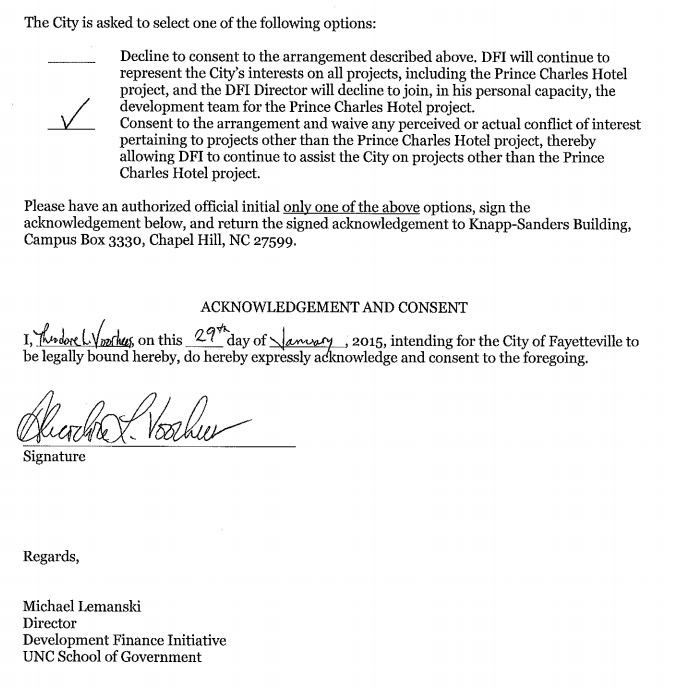
In 2015, the Fayetteville City Manager waived one particular conflict of interest on behalf of you and every taxpayer in the City of Fayetteville:
Do you remember hearing a peep about this in any public meeting or in local press? Probably not, and there is a good reason for that: most of this was done behind closed doors, in closed sessions.
Mayoral Leadership?
Mayor Colvin was questioned about the PCH deal in Dan Kane’s story and appeared to play both sides of the foul line:
Fayetteville Mayor Mitch Colvin said in an interview he supports the project for helping to energize the downtown and build the tax base. But he wants to make sure it is fiscally sound. He was first elected to the council in 2013 and became mayor four years later.
He also said it would help him and other Fayetteville officials if UNC would release more information from the audit so they could understand the conflicts.
I’m confused, Mr. Mayor. There was a clear conflict of interest between public and private actors and your City Manager waived it. While you weren’t Mayor at the time, you were on the City Council and you were chairman of the baseball committee.
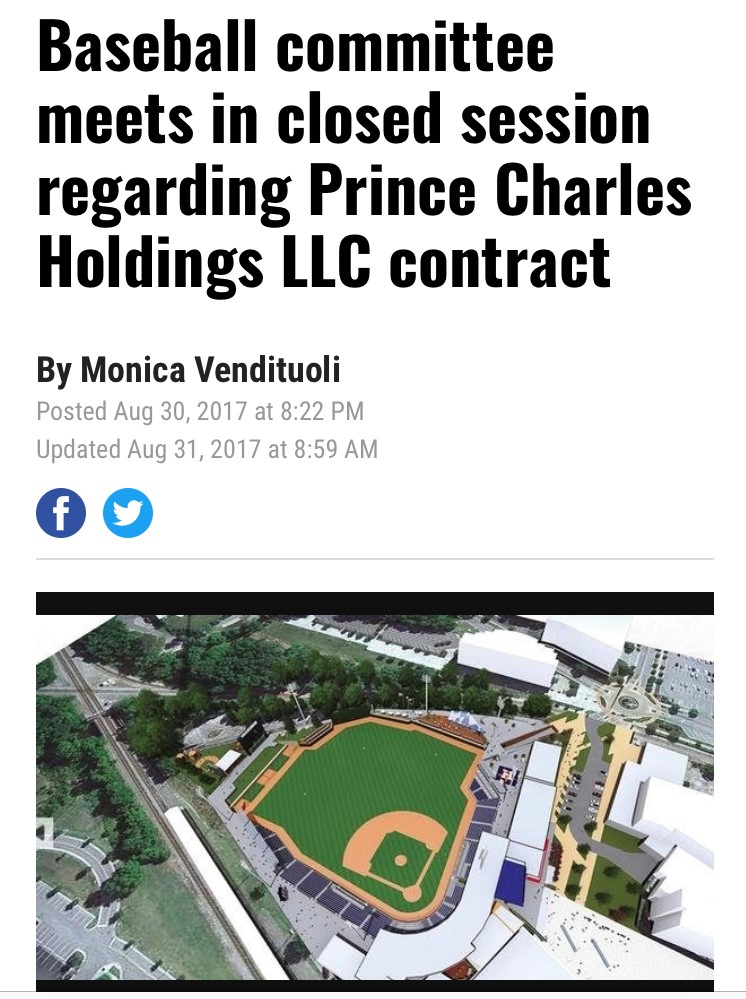
And your “baseball committee” talked about a lot more than just baseball:
Kane’s article ended its “Fayetteville” discussion with another quote from Mayor Colvin:
“If there’s any kind of assumption that anything was incorrect, I think the city needs to be able to show fully how it operated in a transparent way without conflict, and so the only way you can do that is to have a report that is forthcoming and not full of redactions that take out critical information,” he said.
Let me break this one down:
There is no assumption. This whole thing was incorrect from the beginning.
The City can’t show it operated in a transparent way because it didn’t. It has acted behind closed doors in all things related to this deal for the past five years.
We don’t need a report from UNC. We need one from City Hall. You can sign it at the bottom.
Lewis Armistead was born into a military family in 1817 in the town of New Bern, North Carolina. His father and all of his uncles were soldiers. One uncle, George, was the commander of Fort McHenry in the War of 1812. Uncle George’s successful defense of the fort inspired a song called “The Star Spangled Banner.” You may have heard about it.
Needless to say, Lewis was destined to be a soldier, and like most military brats, he went to West Point. He didn’t do well in French class, and he broke a plate over the head of another cadet, so he was kicked out of the Academy. But he remained in the Army, serving honorably across the country, and when the Civil War broke out, he chose the Southern side and served as a Brigadier General.
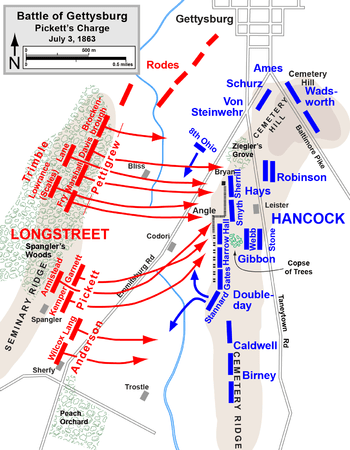
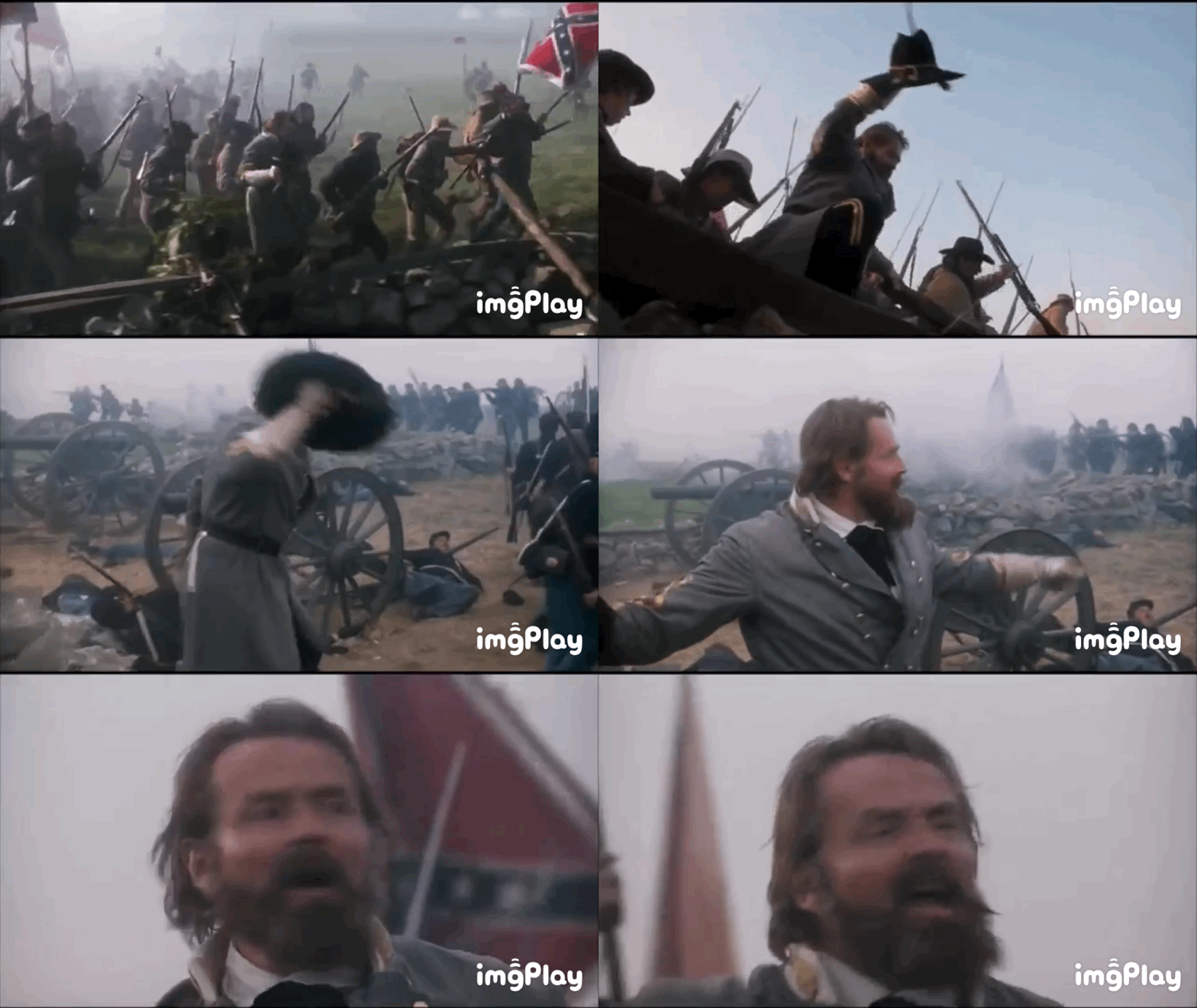
On July 3, 1863, the last day of the Battle of Gettysburg, Armistead had the good fortune of being right in the middle of a charge ordered by Robert E. Lee and lead by General George Pickett. You may have heard about it:
When your day begins at a place called “Seminary Ridge” and ends at a place called “Cemetery Ridge,” you have good cause for concern. But Armistead, the son of soldier, got to it.
His pre-game speech lives on in Civil War glory (at 3:00):
For your lands, for your homes, for your sweethearts, for your wives!
For Virginia! Forward! March!
Armistead hit all the high-notes with this one and got his men right in their hearts. Fight for your home and those you love. What else do you need for motivation? It reminds me a lot of this one:
Sam “Stonewall” Jackson was talking about Richmond, CA, not Richmond, VA, but you get the point. These speeches always work, and Armistead got all the caps in the air:
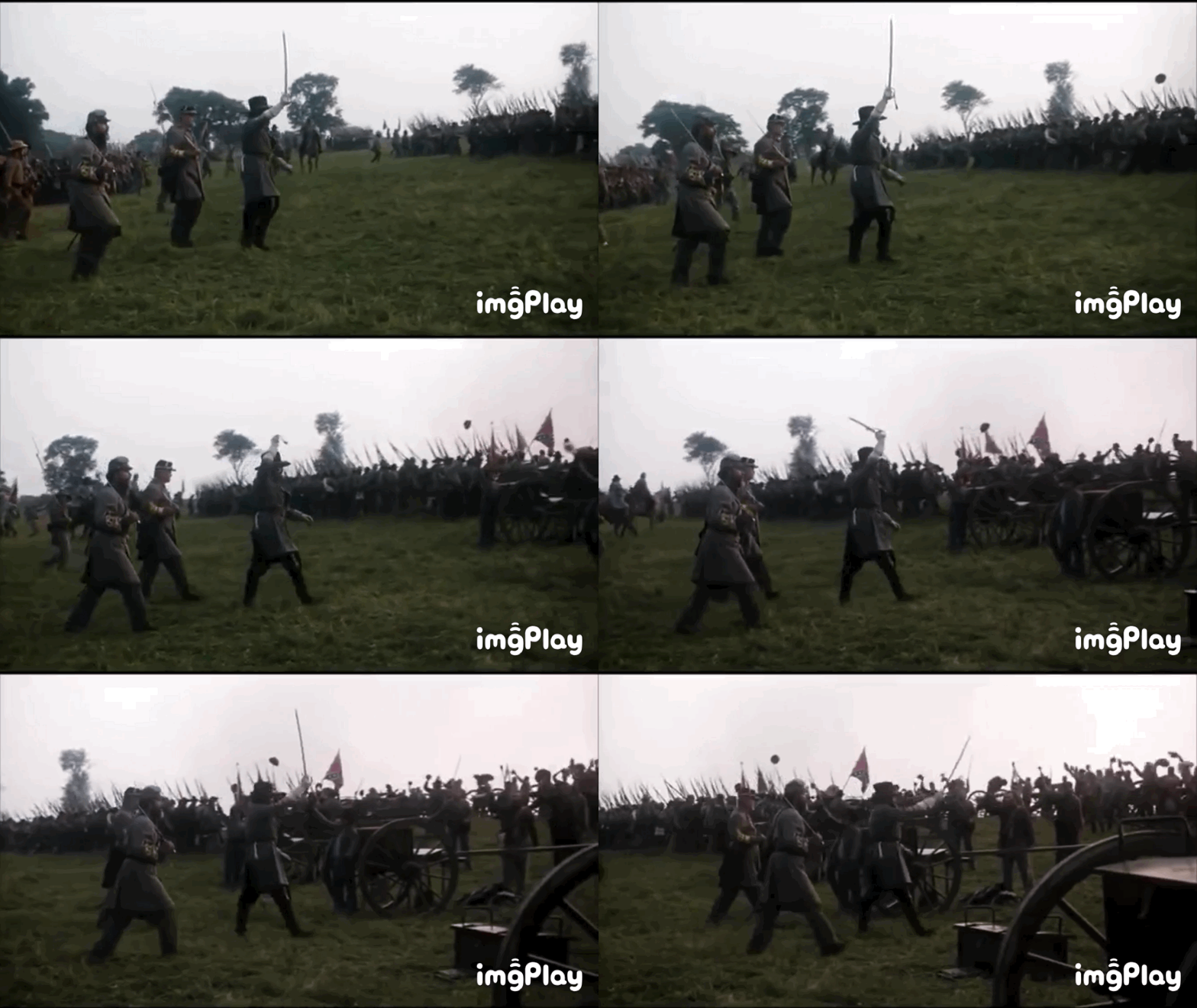
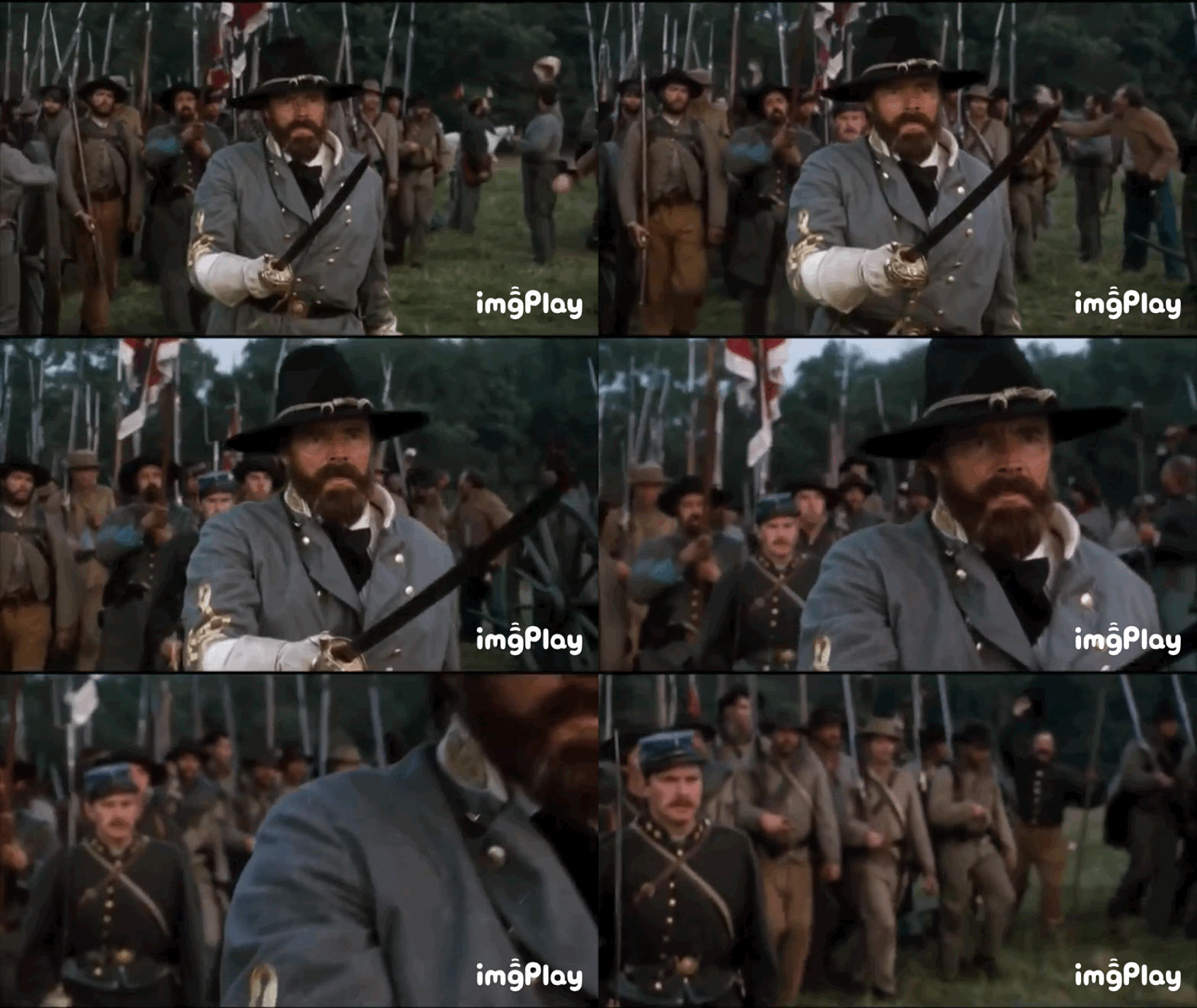
And so he and his men marched, then ran, uphill in a open field into a barrage of artillery fire. Note the consternation on the man’s face:
Armistead made it all the way to the top of Cemetary Ridge (the exact worst possible place a human being could be on Planet Earth on July 3, 1863).
His men were the only Confederate troops to break the Union Lines, at a place called “The Angle” (see map above). For a minute, victory was in sight. Their valor and glory would live in infamy:
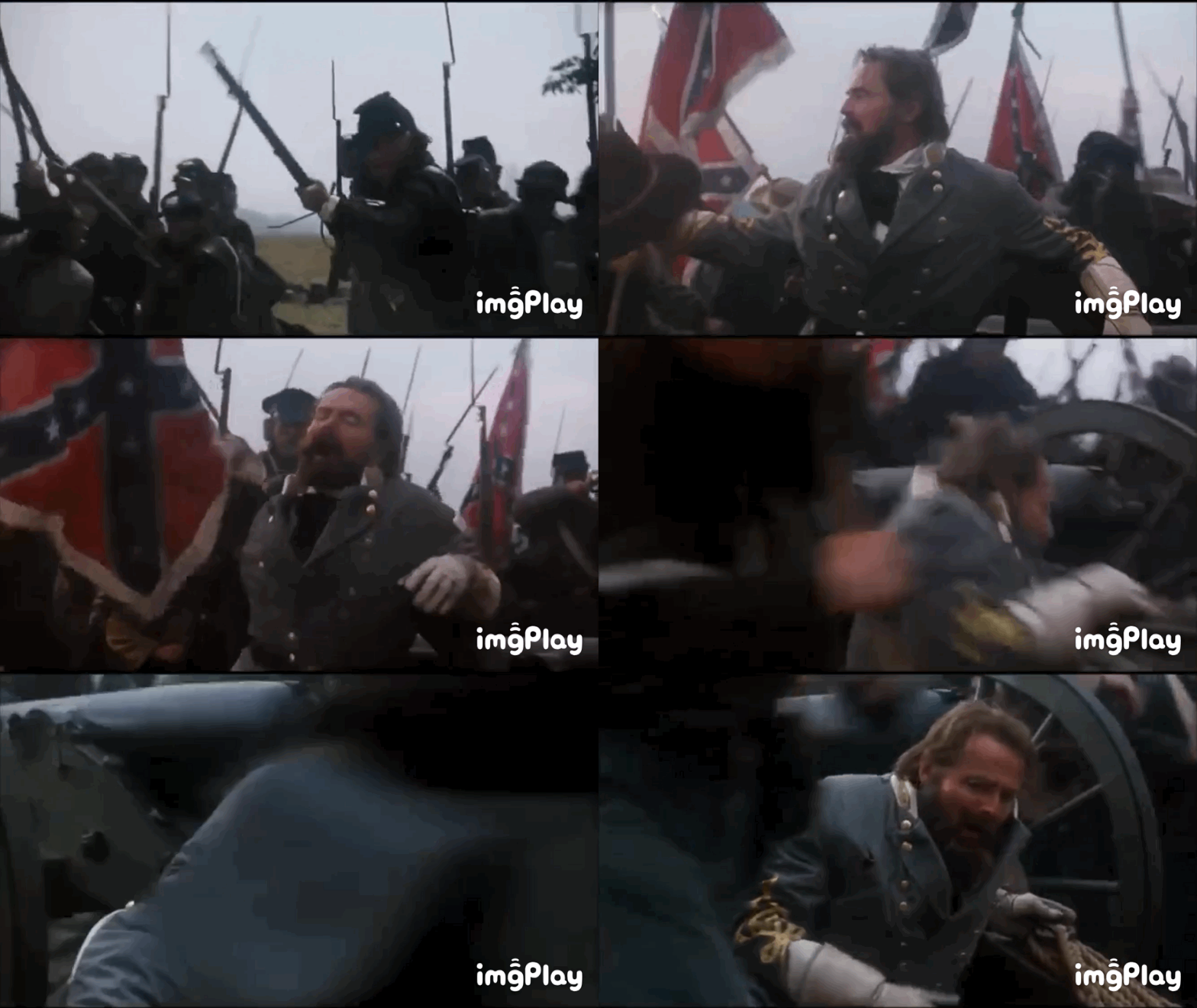
But the Union troops quickly closed the lines, and defeat was snatched from the jaws of victory. As soon as Armistead laid his hand on a Union cannon, he was shot:
Armistead died of his wounds two days later. He’s now buried next to his famous uncle.
His death is a testament to the power of high ground, both moral and practical. You might say that he, like many others on that ridge in grey suits, were destined to fail.
Cumberland on the Front Lines
A few months ago, I wrote a piece entitled “Museums, Vetoes, and How the Sausage Gets Made” where I analyzed how Republican legislators in North Carolina are adding “pork” to the budget to encourage swing Democrats to override Governor Cooper’s expected veto.
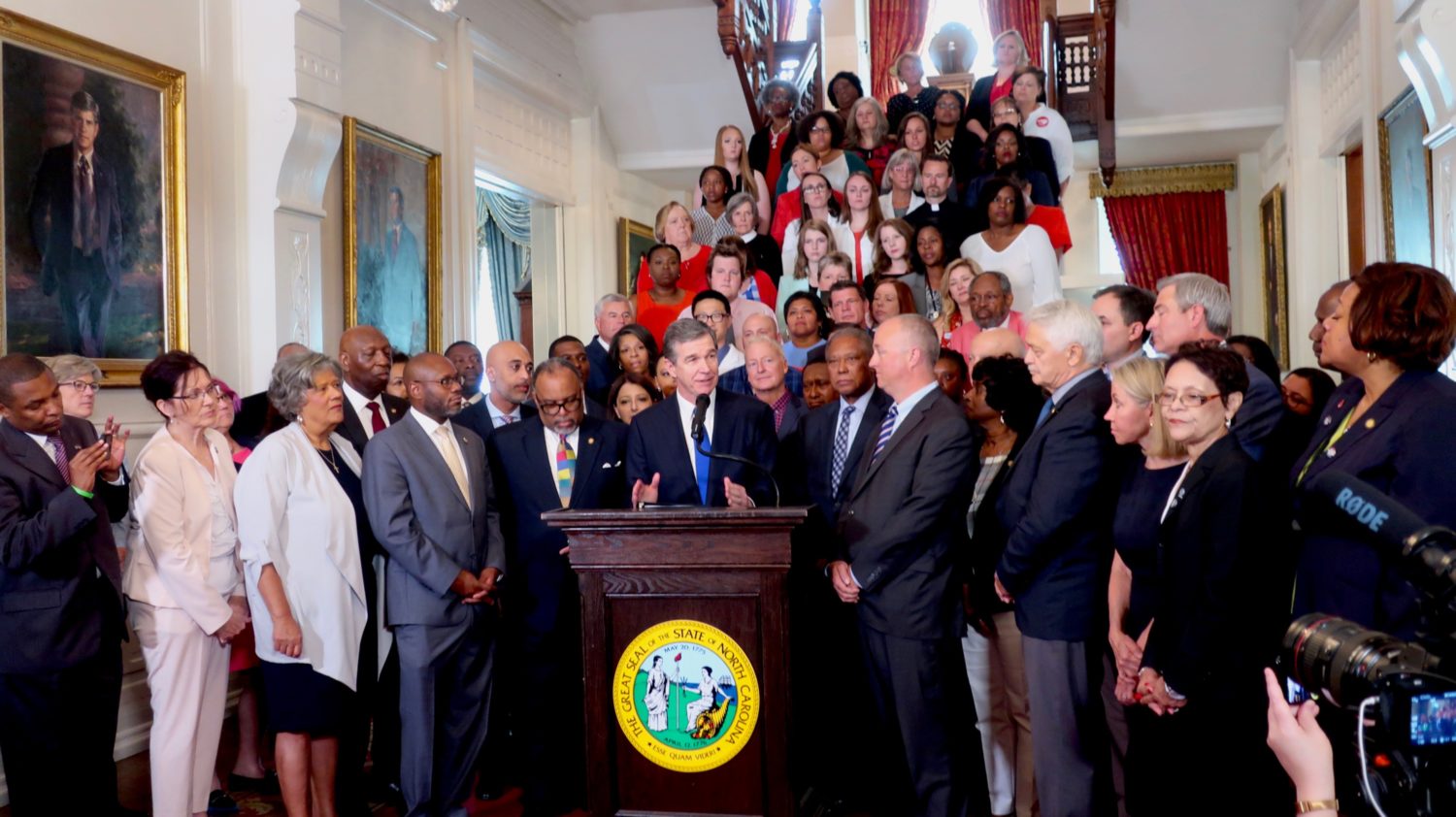
Well, as predicted, Governor Cooper vetoed the budget, and Republicans are looking to pick off votes for an override. In his press release, Cooper argued the Republican Budget didn’t expand Medicaid, didn’t give enough to public education, and harmed lower and middle class citizens while favoring the wealthy.
Cumberland County is now on the front lines of this budget battle, and local business groups are piling on the pressure. One group called “Vision 2026” is taking out ad space, encouraging legislators to vote for the budget. One ad includes a list of earmarks for Cumberland County, the largest and most notable being the Civil War Museum:
Their battle cry is very similar to General Armistead’s: “Fellow Citizens,” it says. “This is not about party, this is about our community.”
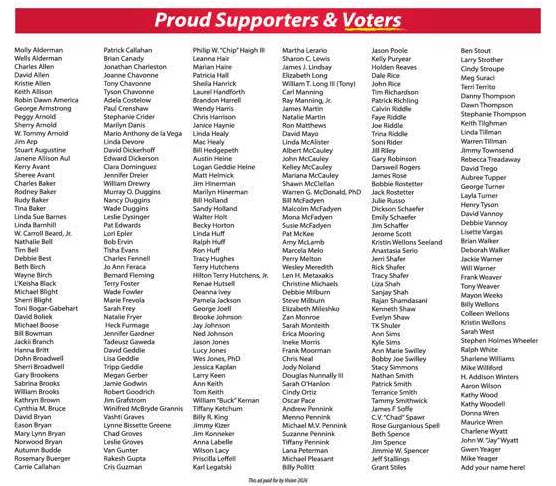
Attached to the ad was a list of supporters that includes the veritable “who’s who” of the political and business community in the area:
And so our Democratic legislators are faced with some difficult choices:
Where do their loyalties lie? With their Party? With their Governor? With Cumberland County? Are state-wide problems more important than a Civil War museum?
Do these legislators represent the citizens of their district or all of North Carolina?
If they “Fight for Cumberland,” will they face a primary challenge by another Democrat for not being loyal to the party. If they “Fight for North Carolina,” will they face scrutiny and lose support “back home?”
Will they die on the hill next Spring, like Armistead?
Where’s the High Ground???
It’s an interesting question, and there’s no easy answer.
Democrats were elected in 2018 under a promise to “break the super-majority” of Republican rule in the North Carolina Legislature. They succeeded, in the face of overwhelmingly-gerrymandered districts that were rigged against them. They made it up the hill. So what was it all for???
Are they breaking their promise to voters if they vote for this budget? Or are they simply doing what’s best for Cumberland County?
I’ll put it to a vote:
If you’re a Democrat and you had to think twice about a “yes” or “no” question, you understand the problem. No matter what happens, someone is going to end up angry. That’s how you know this is an important issue.
And in case you’re wondering, Armistead’s last words were an apology to Union General Winfield Hancock, his close friend and the commander of the forces that had destroyed Armistead and his men on Cemetery Ridge:
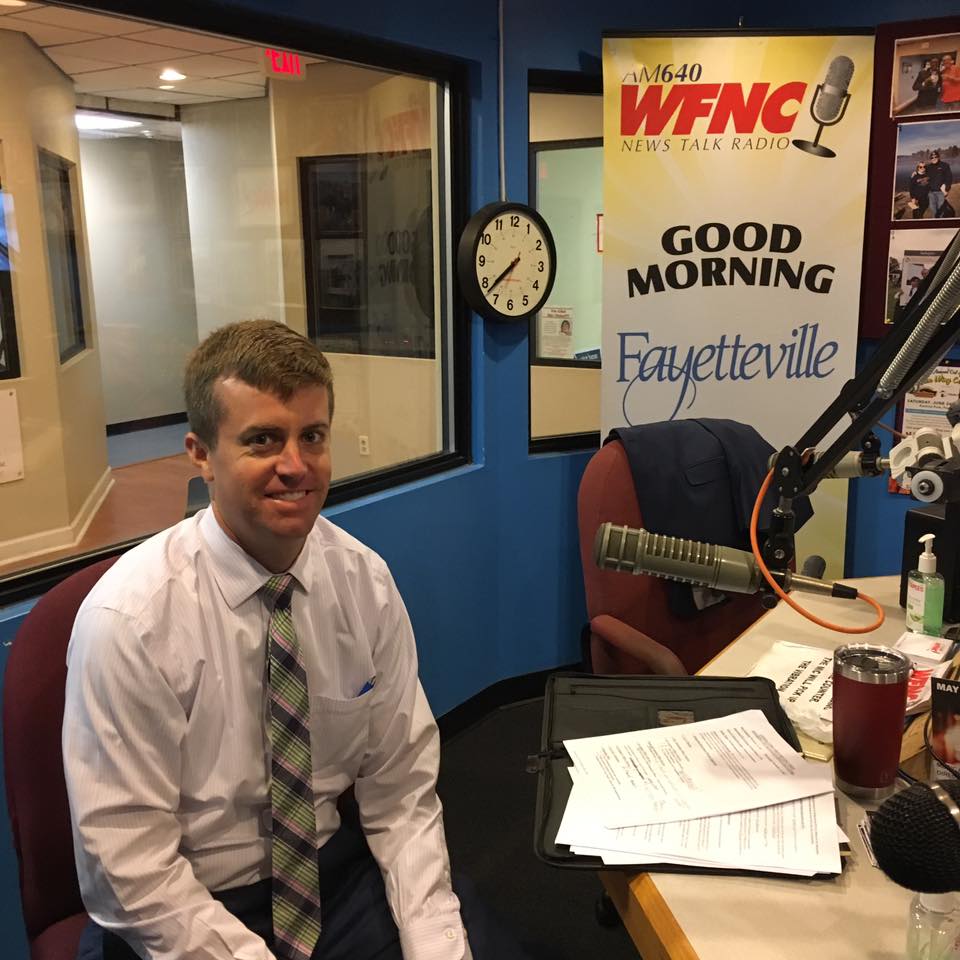
I had the privilege of discussing downtown development on the Good Morning Fayetteville radio program a few weeks ago. You can listen to a segment by clicking on the following link:





 Cross Creek Divide