Historic Pandering in NC-09 Congressional Race

One of my suite mates in Hinton James dorm during my freshman year at Carolina was a Lumbee Indian from Robeson County who was proud of his heritage. He hung Lumbee decorations on the cinder block walls of his room, attended Pow-Wows across the South on weekends, and fought for the recognition of his people at the state and federal level.

At that time, George W. Bush was making the case for an invasion of Iraq, and politics came up more than usual. My suite mate made one fact perfectly clear during our political talks: He hated Jesse Helms with a passion. In 1994, after publicly stating that he supported the Lumbee Tribe’s efforts to gain recognition, Helms had organized a filibuster of a a bill giving the tribe the same federal benefits as other Native Americans. Eight years later, Helms hadn’t been forgiven.


The Lumbee Indians of Robeson County have been a political football in North Carolina for a half-century. Needing votes, Tar Heel politicians pick up this football around election time, only to punt it down the field when push comes to shove.

Nothing has changed.

NC-09’s Recent History

Robeson County has a deep Democratic tradition, but the Republican Party has made headway in recent years. On top of this, Republicans have redrawn Congressional lines to water down the county’s Democratic voting block. In 2014, longtime Robeson County Congressman, Mike McIntyre, retired in the face of a tough re-election bid after his district was redrawn to favor a Republican challenger. Robeson County was without a Democratic congressman for the first time since 1994. It’s remained that way since.

Republicans have held onto the Congressional seat encompassing Robeson, in part, by carrying on the tradition of pandering to the Lumbee Tribe.

A recent case in point is former Republican congressman, Robert Pittenger. A Charlotte businessman, Pittenger began his political career in the North Carolina Senate. He served two terms, then later ran for Lieutenant Governor, losing to Democrat Walter Dalton in the 2008 Obama wave.

In 2011, Pittenger decided to run for Congress. He was elected and seated in 2012 in North Carolina’s Republican-leaning 9th District which surrounded Charlotte (see below in pink). Notice that it’s nowhere near Robeson County in 2012.

Pittenger easily won re-election in a district tailor-made for a suburban Charlotte Republican. In 2014, he was the only Republican candidate for Congress in North Carolina without Democratic opposition.

But his luck didn’t last. The North Carolina districts were ruled unconstitutional and were redrawn for the 2016 election. Pittenger’s 9th district changed dramatically and now included all of Robeson County (below in green):

Quite a different district, as you can see.

So what was Pittenger to do? How would he appeal to constituents in his “new” district that wasn’t rigged to get him elected? Most of them had no idea who he was.

Easy.

After more than decade in public office, Pittenger developed a strong affinity for the Lumbee Tribe. He introduced the Lumbee Recognition Act in Congress to impress his new constituents. Here’s a photo of Pittenger, Senator Richard Burr, and Congressman Richard Hudson meeting with the Lumbee Chairman in 2017.

Jesse Helms wasn’t around to filibuster this time, so there was rising hope that the Lumbees might finally win. But despite the fact that Pittenger’s party controlled Congress and the Presidency, his bill went nowhere and quickly died in committee. The football was kicked down the field, again.

Pittenger’s pandering didn’t earn him any favors in the 2018 Republican primary, and Pittenger lost to Reverend Mark Harris in a tight race. Harris went on to beat Democrat Dan McCready in one of the closest general election races in the country, but the result was overturned due to Harris’s illegal campaign activity. Here’s a few posts from last year covering that race if you want to re-live all the drama.

As a result of Harris’s illegal activity, we have a special election in NC’s 9th Congressional District in 2019, a “do-over,” if you will. Harris has been replaced by Republican Dan Bishop, who, like Pittenger, is a former North Carolina State Senator from Charlotte.

Bishop Follows Pandering Playbook

McCready v. Bishop 19′ is setting up to be just as close as McCready v. Harris 18′. Here’s a snapshot of one of the latest polls:

So what is Bishop doing to try to pick off Robeson County votes? He’s following his predecessor’s pandering playbook:

Bishop is now sponsoring a bill in the North Carolina Legislature for Lumbee recognition. He took this action three days before he announced his candidacy for Congress.

The bill would give the Lumbeeโ€™s governing body the same recognition status granted to municipal governments. Of all of the other pro-Lumbee bills that have gone through the North Carolina Legislature, this is the first bill Bishop has chosen to sponsor. The timing is glaringly suspect, but he’s got an election to win.

Will it Work?

Dan Bishop is as conservative as they come. He’s the author of the “Bathroom Bill” that made North Carolina infamous nationwide, and “Right Dan” is proud of it.
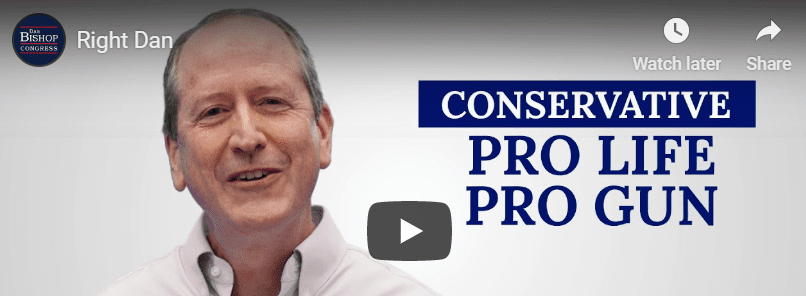
So far this year, despite Trump’s lagging approval rating, Bishop has gone all-in and campaigned beside the President.

This raises an interesting political question for 2019: Can a candidate embrace Donald Trump and still pick off Lumbee votes in 2019? Bishop thinks he can, and the reason may surprise you:

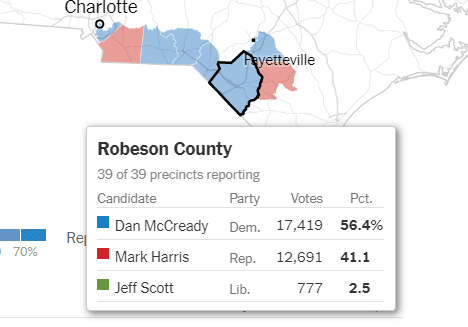
Lumbees reversed course and voted with Republicans and Trump in 2016, making national news. Robeson County became a case study in Trump’s successful campaign. Pundits were baffled. There was no good way to explain how Trump won a county by 5 points four years after Obama won it by 17.

However, much has changed since the 2016 election, and the numbers show that 2016 may be less evidence of a trend and more of an anomaly. In 2018, McCready beat Mark Harris by a substantial margin in Robeson County:
I have a very simple theory as to why:

Remember the “Unite the Right” rally in Charlottesville? Trump, in an epic failure of moral leadership, commented that there were “very fine people on both sides” of a modern day Klan Rally.

This issue isn’t going anywhere. A few weeks ago, we had Trump’s latest North Carolina rally in Greenville where thousands of white North Carolinians chanted “send her back” about a minority member of the United States Congress after Trump complained that she didn’t love America. The reaction from national media and members of Congress made it clear that Trump had gone too far.

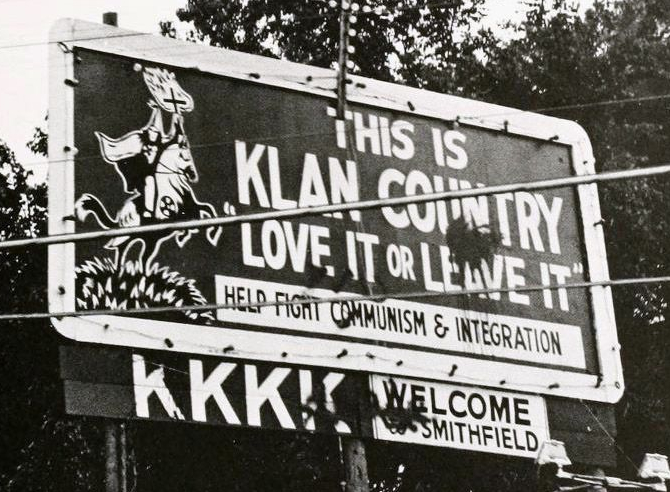
The chant brought back memories of North Carolina’s racist past:
Dan Bishop was right in the middle of it:

Trump has made it perfectly clear that he is doubling down on his racial rhetoric in an attempt to galvanize working class whites for the 2020 election.

As to why this matters, I have a story for you:

In the late 1950’s, the KKK saw its membership rise after the Supreme Court decision Brown v. Board of Education desegregated public schools. Robeson County had a tri-racial population at the time, with African Americans and Lumbee Indians out-numbering whites, so it became a civil rights battleground of sorts.

The KKK burned several crosses in the yards of Lumbee Indians. One of the terrorized Lumbee families had just moved into a “white” neighborhood. The leader of the local KKK group planned a massive rally on a farm in Maxton in order to “put the Indians in their place, to end race mixing.”
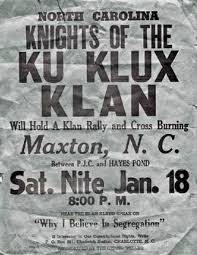
The Lumbees didn’t take kindly to this, so a thousand of them decided to do something about it. The ended up outnumbering the Klan, 5-1. Shouting war chants, they stormed the rally, stole the Klan’s cross, and ran the Klan members off the field.
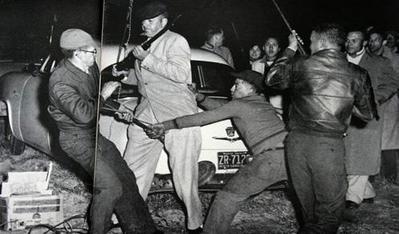
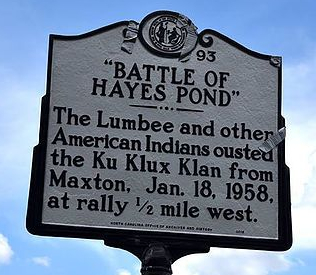
The event made national news. One of the Lumbees was Simon Oxendine, the son of the Mayor of Pembroke, and a World War II Veteran Flight Engineer who took part in the first US raid on Berlin. He was photographed after the battle and featured in Life magazine, smiling with the KKK banner he had captured.

And so, questions remain for Dan Bishop in 2019:

Will the pandering work?

Will the Lumbee Tribe support a staunch conservative who’s gone all-in with Trump?

Not this time.

Public, Private…It’s all the same.

For over a year, I have been critical of Fayetteville’s downtown development deal with Prince Charles Holdings because it uses public tax dollars to benefit one corporation. I’m in favor of public money being used for public facilities (like baseball stadiums). I don’t support using public money to build parking decks for private companies. If you’ve read this blog, you’re aware of that by now.

The lines between public and private interests are crucial and go to the heart of what our government should be about, at all levels. In fact it’s written in in the parchment of our state constitution, which bars cities from using tax dollars for private purposes:

ARTICLE V – FINANCE
Sec. 2. State and local taxation.

(1) Power of taxation. The power of taxation shall be exercised in a just and equitable manner, for public purposes only, and shall never be surrendered, suspended, or contracted away.

The constitution also prevents special treatment:

N.C. Const., Art. I, Sec. 32. Exclusive emoluments. No person or set of persons is entitled to exclusive or separate emoluments or privileges from the community but in consideration of public services.

Why did our Founders include these provisions? Quite frankly, they were tired of the King of England giving economic favors to those in his favor. A government “of the people” had to live up to its name.

Conflicts of Interest

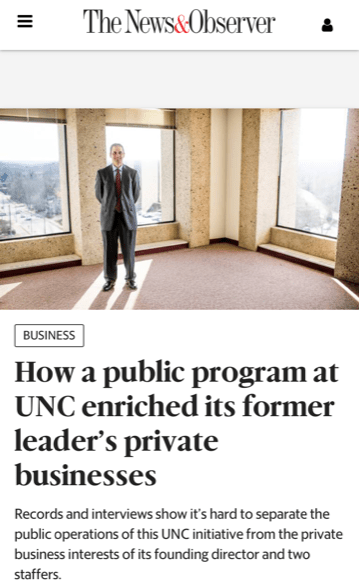
We tend to take these principles for granted until they start to break down. One such breakdown involving Fayetteville’s downtown development deal was described in the cover story in the News and Observer today. The title speaks for itself:

N&O reporter Dan Kane goes into great detail about the formation of Fayetteville’s downtown development project. If you want to know why we have a baseball stadium next to the Prince Charles Hotel with no parking, it’s worth reading.

Kane uncovers a pattern: Employees at the UNC School of Government (a public institution) created a program called the Development Finance Initiative (also public) to help advise cities and towns in economic development matters. These same employees, after giving said advice, created private companies to make money off of said advice in projects throughout the state.

It’s a clear conflict of interest.

Fayetteville “Waives” Conflict without Public Disclosure

When you have a conflict of interest, you need to do something about it. The law lets both parties “waive” the conflict if they choose to.

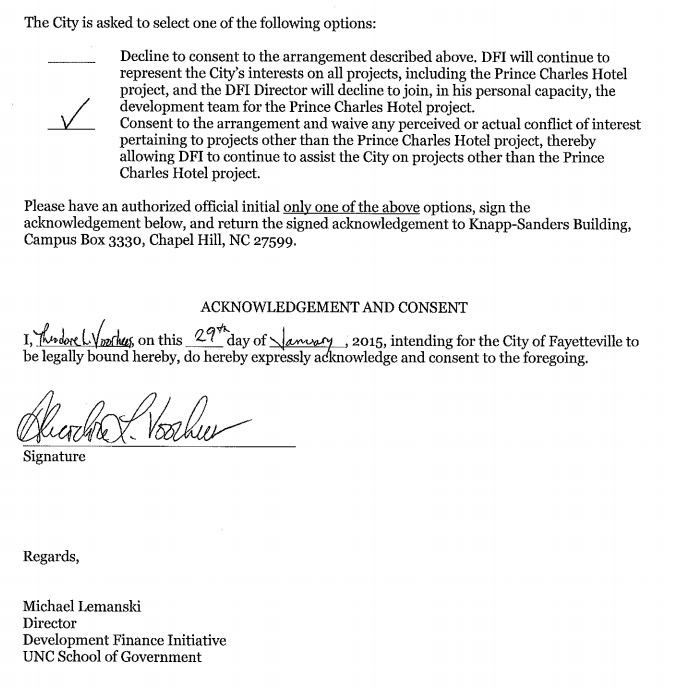
In 2015, the Fayetteville City Manager waived one particular conflict of interest on behalf of you and every taxpayer in the City of Fayetteville:

Click here for a link to the full document.

Do you remember hearing a peep about this in any public meeting or in local press? Probably not, and there is a good reason for that: most of this was done behind closed doors, in closed sessions.

Mayoral Leadership?

Mayor Colvin was questioned about the PCH deal in Dan Kane’s story and appeared to play both sides of the foul line:

Fayetteville Mayor Mitch Colvin said in an interview he supports the project for helping to energize the downtown and build the tax base. But he wants to make sure it is fiscally sound. He was first elected to the council in 2013 and became mayor four years later.

He also said it would help him and other Fayetteville officials if UNC would release more information from the audit so they could understand the conflicts.

I’m confused, Mr. Mayor. There was a clear conflict of interest between public and private actors and your City Manager waived it. While you weren’t Mayor at the time, you were on the City Council and you were chairman of the baseball committee.

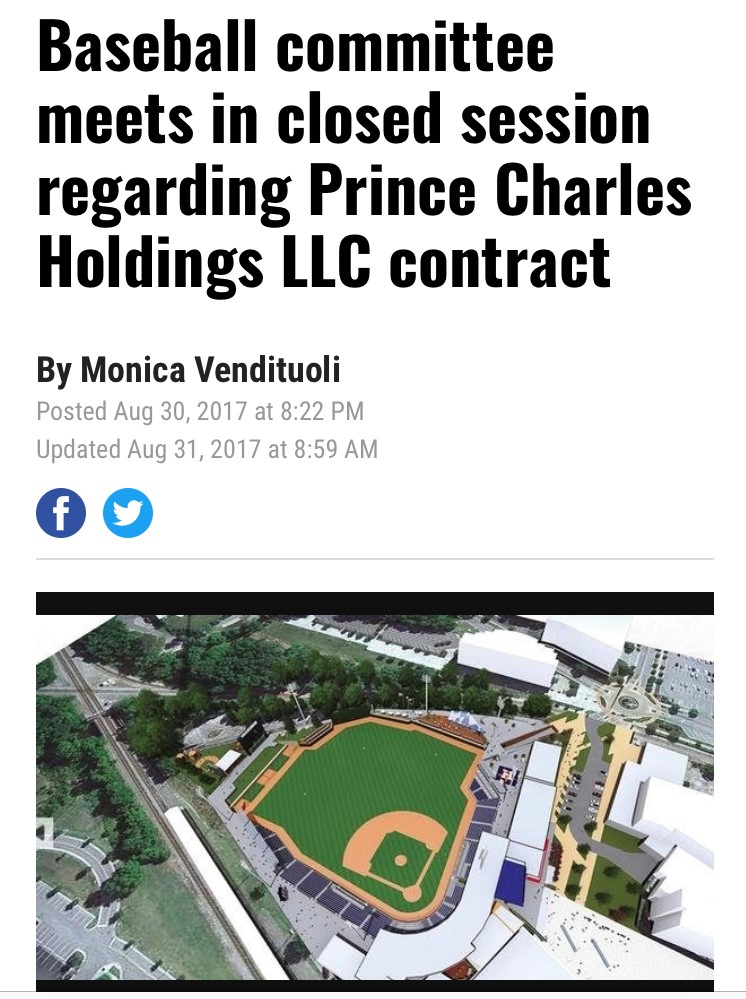
And your “baseball committee” talked about a lot more than just baseball:

Kane’s article ended its “Fayetteville” discussion with another quote from Mayor Colvin:

โ€œIf thereโ€™s any kind of assumption that anything was incorrect, I think the city needs to be able to show fully how it operated in a transparent way without conflict, and so the only way you can do that is to have a report that is forthcoming and not full of redactions that take out critical information,โ€ he said.

Let me break this one down:

  1. There is no assumption. This whole thing was incorrect from the beginning.
  2. The City can’t show it operated in a transparent way because it didn’t. It has acted behind closed doors in all things related to this deal for the past five years.
  3. We don’t need a report from UNC. We need one from City Hall. You can sign it at the bottom.

For Cumberland!!!

Lewis Armistead was born into a military family in 1817 in the town of New Bern, North Carolina. His father and all of his uncles were soldiers. One uncle, George, was the commander of Fort McHenry in the War of 1812. Uncle George’s successful defense of the fort inspired a song called “The Star Spangled Banner.” You may have heard about it.

Needless to say, Lewis was destined to be a soldier, and like most military brats, he went to West Point. He didn’t do well in French class, and he broke a plate over the head of another cadet, so he was kicked out of the Academy. But he remained in the Army, serving honorably across the country, and when the Civil War broke out, he chose the Southern side and served as a Brigadier General.

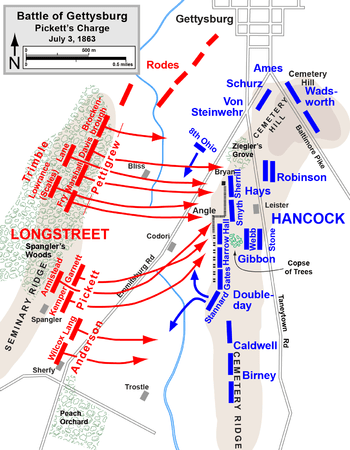
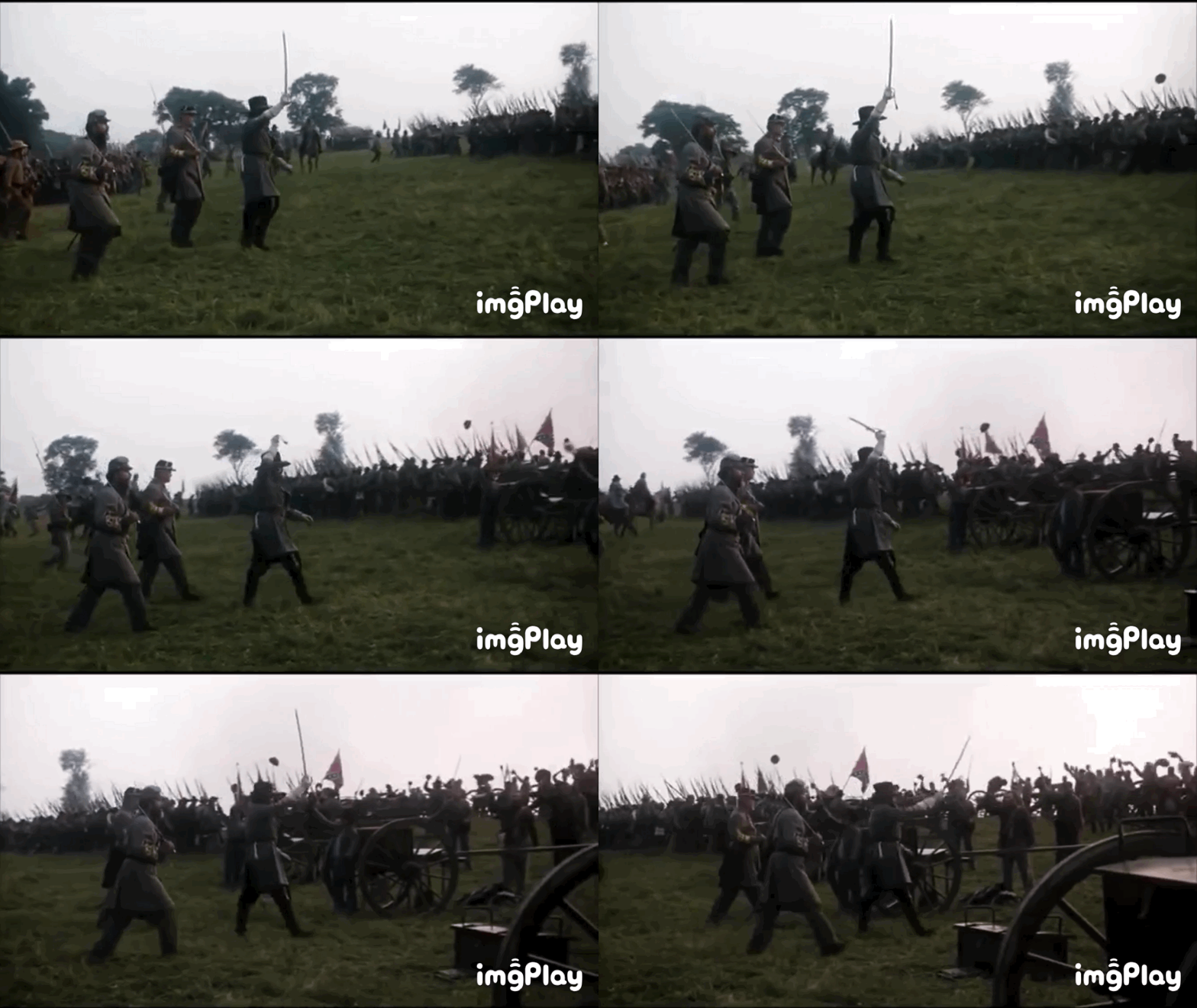
On July 3, 1863, the last day of the Battle of Gettysburg, Armistead had the good fortune of being right in the middle of a charge ordered by Robert E. Lee and lead by General George Pickett. You may have heard about it:

When your day begins at a place called “Seminary Ridge” and ends at a place called “Cemetery Ridge,” you have good cause for concern. But Armistead, the son of soldier, got to it.

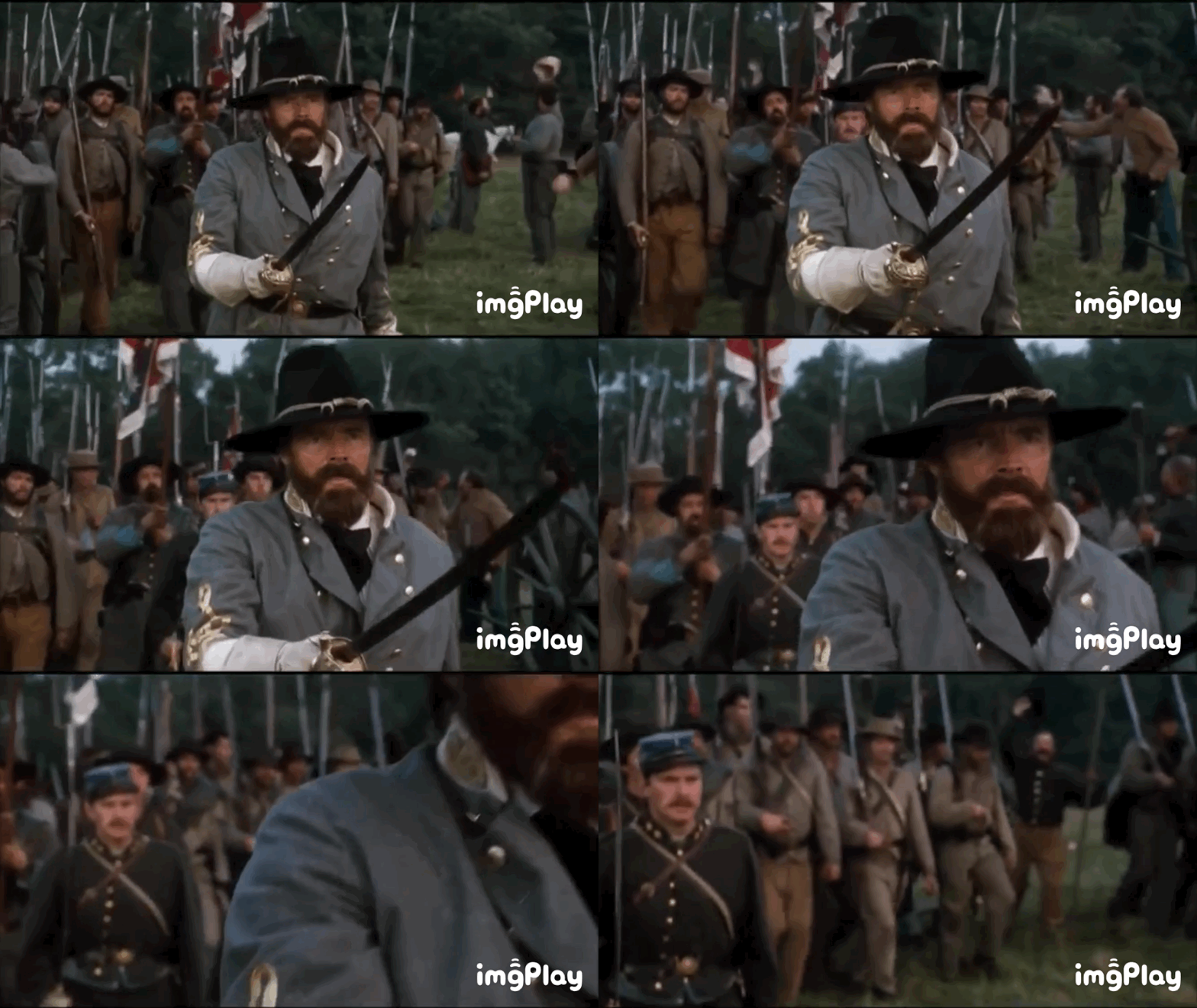
His pre-game speech lives on in Civil War glory (at 3:00):

For your lands, for your homes, for your sweethearts, for your wives!

For Virginia! Forward! March!

Armistead hit all the high-notes with this one and got his men right in their hearts. Fight for your home and those you love. What else do you need for motivation? It reminds me a lot of this one:

Sam “Stonewall” Jackson was talking about Richmond, CA, not Richmond, VA, but you get the point. These speeches always work, and Armistead got all the caps in the air:

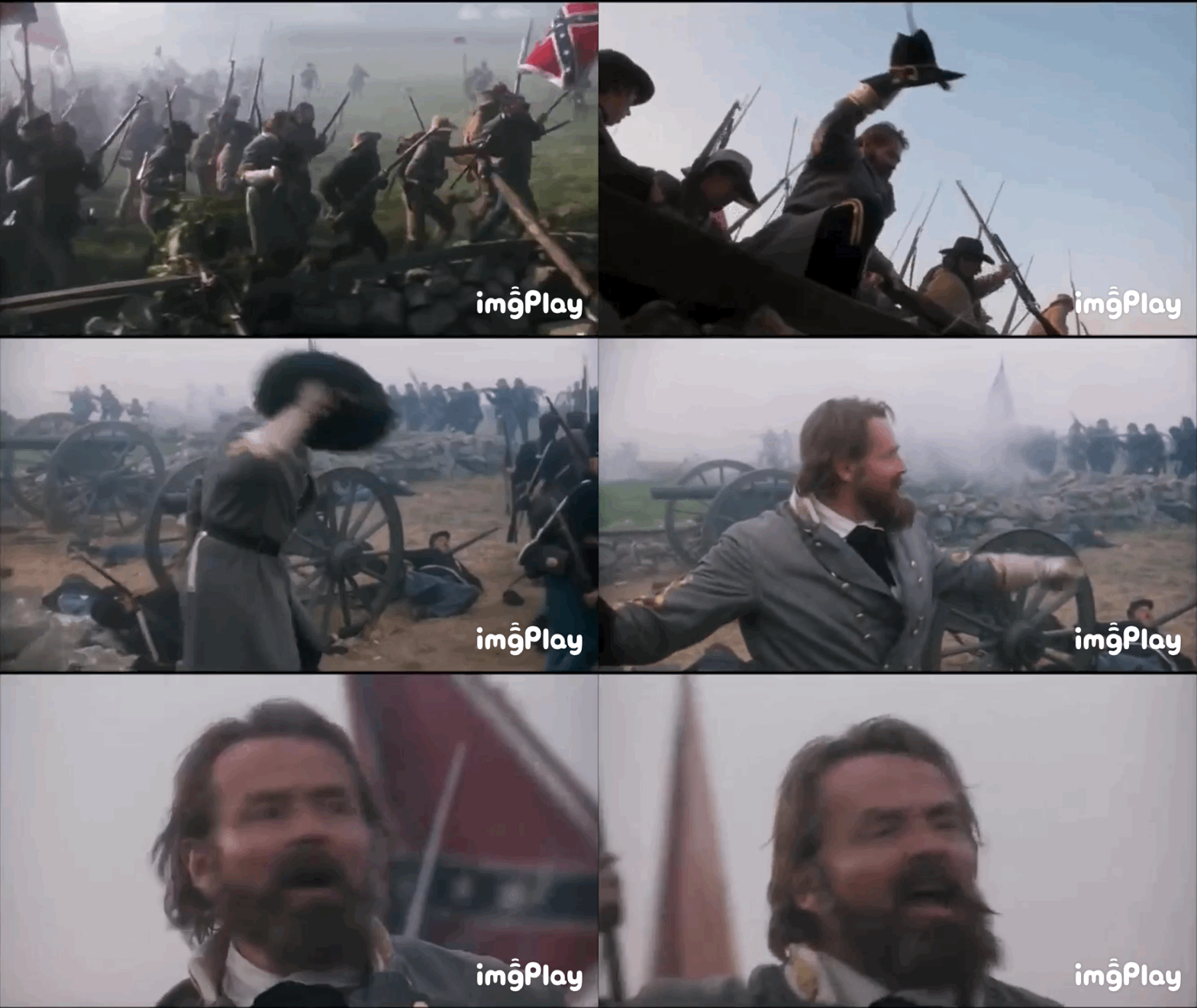
And so he and his men marched, then ran, uphill in a open field into a barrage of artillery fire. Note the consternation on the man’s face:

Armistead made it all the way to the top of Cemetary Ridge (the exact worst possible place a human being could be on Planet Earth on July 3, 1863).

His men were the only Confederate troops to break the Union Lines, at a place called “The Angle” (see map above). For a minute, victory was in sight. Their valor and glory would live in infamy:

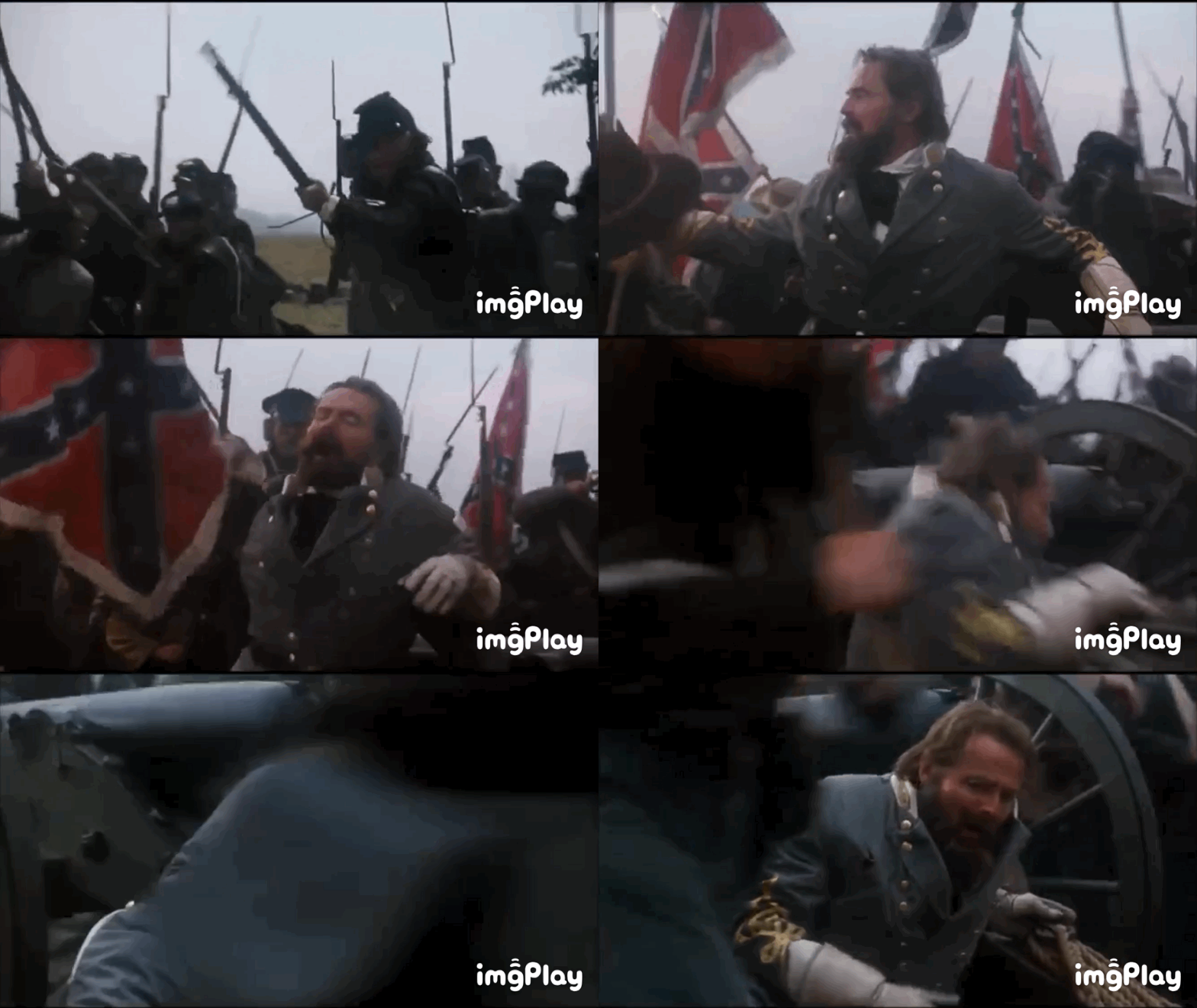
But the Union troops quickly closed the lines, and defeat was snatched from the jaws of victory. As soon as Armistead laid his hand on a Union cannon, he was shot:

Armistead died of his wounds two days later. He’s now buried next to his famous uncle.

His death is a testament to the power of high ground, both moral and practical. You might say that he, like many others on that ridge in grey suits, were destined to fail.


Cumberland on the Front Lines

A few months ago, I wrote a piece entitled “Museums, Vetoes, and How the Sausage Gets Made” where I analyzed how Republican legislators in North Carolina are adding “pork” to the budget to encourage swing Democrats to override Governor Cooper’s expected veto.

Well, as predicted, Governor Cooper vetoed the budget, and Republicans are looking to pick off votes for an override. In his press release, Cooper argued the Republican Budget didn’t expand Medicaid, didn’t give enough to public education, and harmed lower and middle class citizens while favoring the wealthy.

Image result for roy cooper budget veto

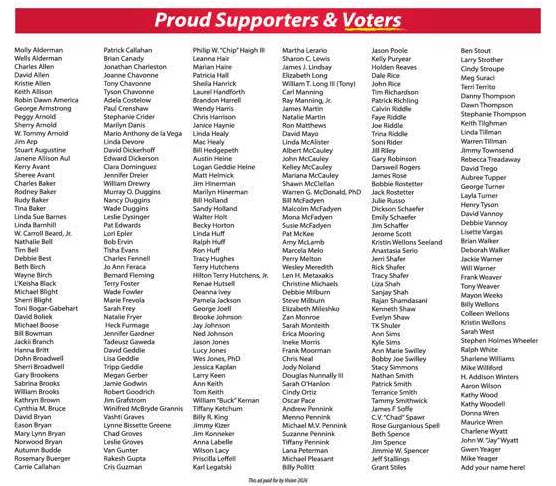
Cumberland County is now on the front lines of this budget battle, and local business groups are piling on the pressure. One group called “Vision 2026” is taking out ad space, encouraging legislators to vote for the budget. One ad includes a list of earmarks for Cumberland County, the largest and most notable being the Civil War Museum:

Their battle cry is very similar to General Armistead’s: “Fellow Citizens,” it says. “This is not about party, this is about our community.”

Attached to the ad was a list of supporters that includes the veritable “who’s who” of the political and business community in the area:

And so our Democratic legislators are faced with some difficult choices:

Where do their loyalties lie? With their Party? With their Governor? With Cumberland County? Are state-wide problems more important than a Civil War museum?

Do these legislators represent the citizens of their district or all of North Carolina?

If they “Fight for Cumberland,” will they face a primary challenge by another Democrat for not being loyal to the party. If they “Fight for North Carolina,” will they face scrutiny and lose support “back home?”

Will they die on the hill next Spring, like Armistead?

Where’s the High Ground???

It’s an interesting question, and there’s no easy answer.

Democrats were elected in 2018 under a promise to “break the super-majority” of Republican rule in the North Carolina Legislature. They succeeded, in the face of overwhelmingly-gerrymandered districts that were rigged against them. They made it up the hill. So what was it all for???

Are they breaking their promise to voters if they vote for this budget? Or are they simply doing what’s best for Cumberland County?

I’ll put it to a vote:

If you’re a Democrat and you had to think twice about a “yes” or “no” question, you understand the problem. No matter what happens, someone is going to end up angry. That’s how you know this is an important issue.

And in case you’re wondering, Armistead’s last words were an apology to Union General Winfield Hancock, his close friend and the commander of the forces that had destroyed Armistead and his men on Cemetery Ridge:

Thanks for reading.

Dirty Bucks and Studies (Downtown Fayetteville)

Growing up as a young man in the Episcopal Church in North Carolina meant you had to dress in a decent manner every Sunday. A suit wasn’t required, and except for Easter and Christmas, a dress shirt and khakis made due.

The footwear of choice (or chosen for you) as a young kid in the late 80’s and early 90’s were dirty bucks. These were essentially brown leather/suede shoes with orange-reddish rubber soles. They were bad:

Image result for dirty bucks

To make matters worse, they never fit you right. You were either in constant pain because you had out-grown last year’s pair, or you looked goofy as all get out because the new “bucks” handed-down from a friend or relative were way too big. There was never anything right about these shoes, but mom always made sure you had a pair lined up for that particular season.

Growing Pains

This week, the Fayetteville Observer’s Editorial Board gave the “all clear” for parking in downtown Fayetteville, despite the news that multiple downtown businesses are losing revenue due to decreased parking availability as a result of the new stadium. In a piece entitled “Downtown parking not the threat itโ€™s billed as, but plan needs work,” the paper had this to say:

We will caution that stakeholders should approach this process with realistic expectations. It does not strike us as realistic that downtown parking will continue to be as it has in the past. Chalk it up to growing pains related to a stadium and related projects that is bringing more than $100 million in investment downtown and, according to (Mayor) Colvin, has brought 350,000 people downtown since April, which includes Dogwood Festival numbers. A more robust, busier downtown creates parking demands; rate hikes would inevitably follow.

I’d like to hone in on this a bit:

This is the same editorial board that endorsed the use of tax payer dollars for the Prince Charles Holdings parking deck next to the stadium over a year ago saying:

โ€œThe parking deck is likely to get plenty of use by the hotel, the office building and the ballpark, as well as by downtown visitors.โ€

Now that we know that statement is false and there will only be 32 public spaces in the 492-space deck, the Observer is telling Fayetteville to suck it up. We’re all overreacting and we need to be “realistic”:

Are Fayetteville residents scaring themselves to death over downtown parking?

Maybe.

Maybe we wouldn’t be overreacting if we were told the truth about the deal from the beginning? Which leads me to the word of the day:

Fayetteville built a 4,786 seat stadium downtown and added no parking infrastructure to support it. If that seems strange to you, you’re on track.

For example, if you and I decided to build a theatre, stadium, or other large public venue in Fayetteville (outside of downtown) we would have to include parking facilities in our plans before the City would let us lay a brick. In fact, we’d have needed 1 parking space for every 4 seats according to the city code:

Again, the parking requirements don’t apply to Downtown, so the City isn’t really breaking its own rules as much as itโ€™s ignoring its own recommendations.

But they’ve got it covered, don’t worry:

 Here’s a copy of the comprehensive study if you want to read it:

If you don’t want to read it it, let me summarize it in one sentence: We paid a bunch of money to people from outside of Fayetteville to come in and tell us that everything was going to work out fine.

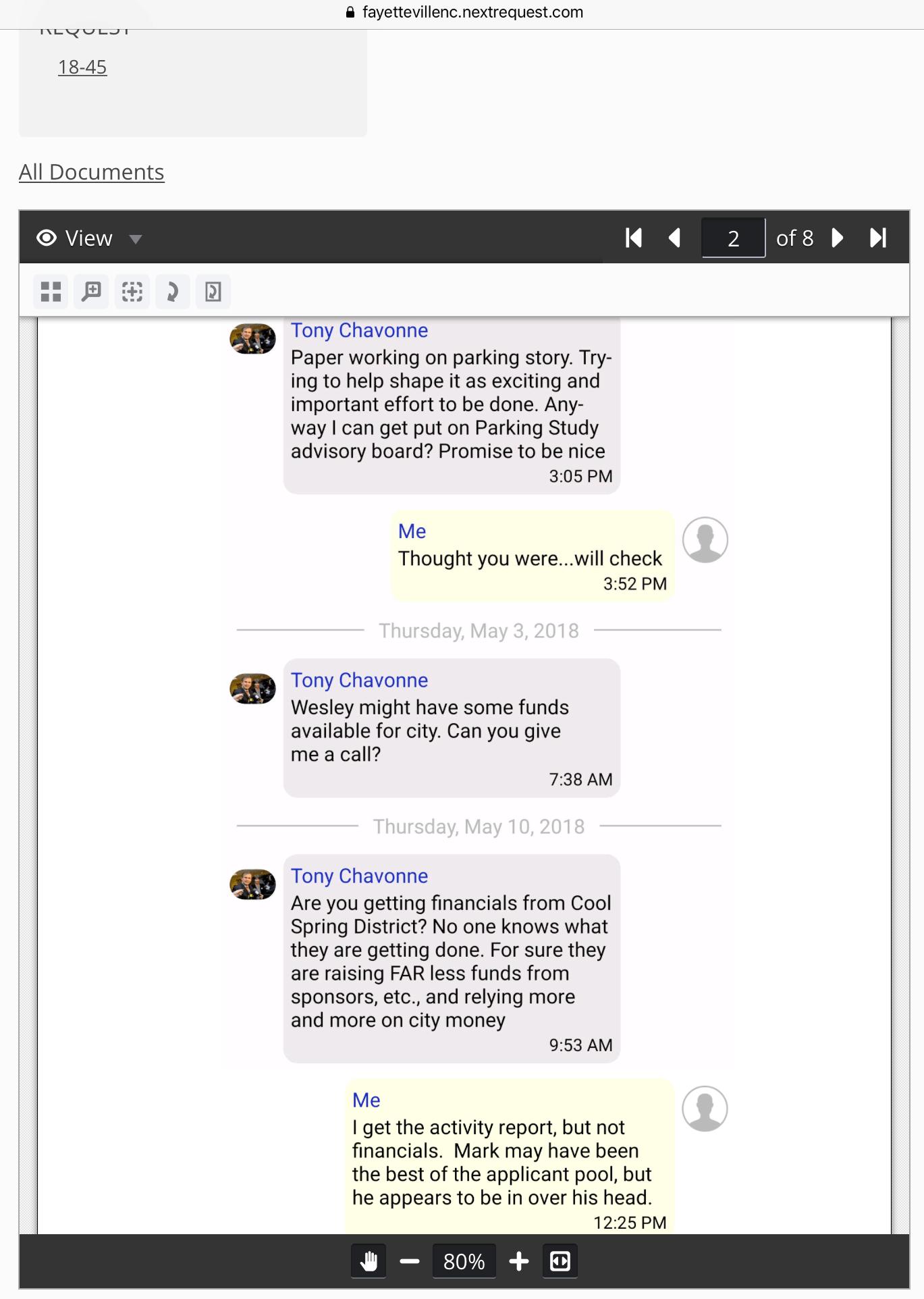
Like many government-funded studies, we shaped it to our desired outcome. Of course, movers and shakers inside Fayetteville played a part. Even our former Mayor offered his “nice” personality to the study’s advisory board to ensure that the paper covered the parking issue in an “exciting” way. City Manager Doug Hewett accepted his offer by text message:

Special Meeting Called

Tonight, the City Council has called a special meeting to deal with downtown parking. Apparently, the study didn’t tell us everything we needed to know. Maybe it was never supposed to???

I think this meeting is for political show alone. After all, this is an election year, and the optics of paying millions more for a private parking deck in the face of a public parking shortage are…well…poor.

In the end, what can they really do? Our city leaders can’t solve the problem they created when they made the decision to bring thousands of people downtown with no infrastructure to support them:

Last year’s dirty bucks are too small, and there’s no hand-me-downs available.