When the Law Says it All

§ 160A-458.3.  Downtown development projects.

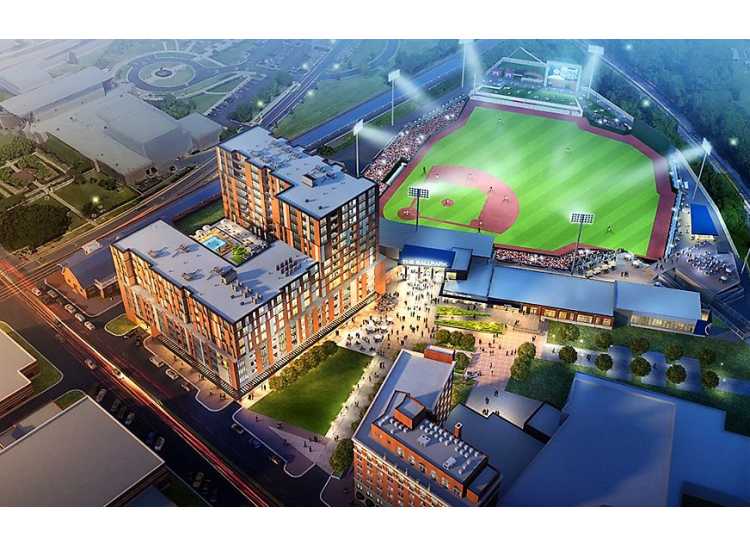
(a)        In this section, “downtown development project” means a capital project in the city’s central business district, as that district is defined by the city council, comprising one or more buildings and including both public and private facilities.  By way of illustration but not limitation, such a project might include a single building comprising a publicly owned parking structure and publicly owned convention center and a privately owned hotel or office building.
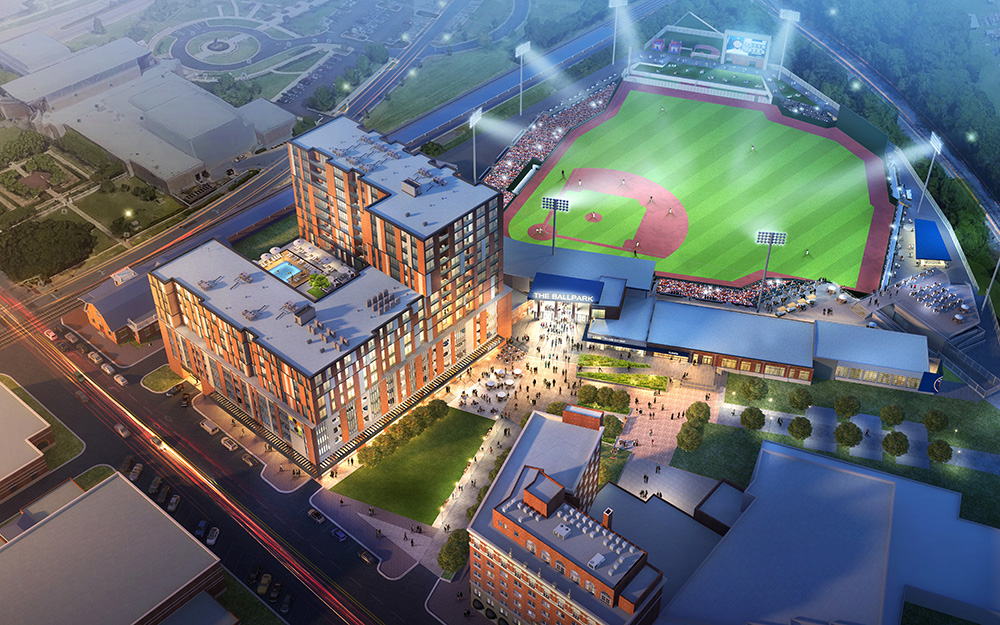
Like this one!

(b)        If the city council finds that it is likely to have a significant effect on the revitalization of the central business district, the city may acquire, construct, own, and operate or participate in the acquisition, construction, ownership, and operation of a downtown development project or of specific facilities within such a project.  The city may enter into binding contracts with one or more private developers with respect to acquiring, constructing, owning, or operating such a project. 

Like this one!

Such a contract may, among other provisions, specify the following:

(1)        The property interests of both the city and the developer or developers in the project, provided that the property interests of the city shall be limited to facilities for a public purpose;

This image has an empty alt attribute; its file name is shrug_1f937-e1553697803703.png

(2)        The responsibilities of the city and the developer or developers for construction of the project;

(3)        The responsibilities of the city and the developer or developers with respect to financing the project.

Such a contract may be entered into before the acquisition of any real property necessary to the project.

(c)        A downtown development project may be constructed on property acquired by the developer or developers, on property directly acquired by the city, or on property acquired by the city while exercising the powers, duties, and responsibilities of a redevelopment commission pursuant to G.S. 160A-505 or G.S. 160A-456.

(d)       In connection with a downtown development project, the city may convey interests in property owned by it, including air rights over public facilities, as follows:

(1)        If the property was acquired while the city was exercising the powers, duties, and responsibilities of a redevelopment commission, the city may convey property interests pursuant to the “Urban Redevelopment Law” or any local modification thereof.

(2)        If the property was acquired by the city directly, the city may convey property interests pursuant to G.S. 160A-457, and Article 12 of Chapter 160A of the General Statutes does not apply to such dispositions.

(3)        In lieu of conveying the fee interest in air rights, the city may convey a leasehold interest for a period not to exceed 99 years, using the procedures of subparagraphs (1) or (2) of this subsection, as applicable.

(e)        The contract between the city and the developer or developers may provide that the developer or developers shall be responsible for construction of the entire downtown development project.  If so, the contract shall include such provisions as the city council deems sufficient to assure that the public facility or facilities included in the project meet the needs of the city and are constructed at a reasonable price.  A project constructed pursuant to this paragraph is not subject to Article 8 of Chapter 143 of the General Statutes, provided that city funds constitute no more than fifty percent (50%) of the total costs of the downtown development project.  Federal funds available for loan to private developers in connection with a downtown development project shall not be considered city funds for purposes of this subsection.

(f)        Operation. – The city may contract for the operation of any public facility or facilities included in a downtown redevelopment project by a person, partnership, firm or corporation, public or private.  Such a contract shall include provisions sufficient to assure that any such facility or facilities are operated for the benefit of the citizens of the city.

Related image

(g)        Grant funds. – To assist in the financing of its share of a downtown development project, the city may apply for, accept and expend grant funds from the federal or State governments. (1987, c. 619, s. 1.)


Breakdown

So there’s some law. Some law that’s only as good as the paper it’s written on if it’s not followed or enforced. So let’s explore what’s going on in Fayetteville. Put on your thinking cap and apply the law to the facts of our city’s new downtown parking deck.

From Bill Kirby’s latest article in the Fayetteville Observer:

When it comes to downtown parking for Woodpeckers games, you might be interested to know that you will not be parking in the new garage overlooking the $40-plus million stadium – not unless you are living in “The Gathering at Prince Charles” or working in an office there.”

“Generally there will be no parking in the parking deck for Woodpeckers patrons.”

“The parking deck will be for office patrons….Hyatt hotel customers and apartment-holders at “The Gathering at Prince Charles…


If your thinking cap stayed on amid the gusts of obvious blowing in your direction, you quickly realized that Fayetteville’s deal with Prince Charles Holdings doesn’t “mesh” very well with the above statute. So how’d this happen? In short, we wanted to build a stadium without raising taxes, and the guys who wrote the book on downtown development came calling with a “win-win” for the City and…….well…themselves.

Proponents of the deal (and the attorneys who drafted the contract between PCH and the City) will maintain that “economic development” is a public purpose. In short, the deck and the deal will boost tax revenue and spur other growth downtown, and so the contract passes the test. See: Maready v. City of Winston-Salem, 342 N.C. 708 (1996).

If that’s the case, then why don’t we simply give private developers bags of cash if they invest in downtown Fayetteville? It’s what we’re doing already, and it’s a lot more honest. We could even bid it out beforehand to find the developer that would accept the lightest bag of cash in exchange for building a hotel downtown. A minority or local developer would, of course, in keeping with City policy, get a little bit heavier bag of cash if he or she wants to bid.   

Seem absurd? So does buying a parking deck, then leasing it back to the person you bought it from at a loss when you could’ve really used the parking spaces.

I know I should stop beating this dead horse. You’re probably tired of reading about it. But the law and the North Carolina Constitution haven’t changed in the year or so that I’ve been on it. Nor are they likely to change in three weeks, when the first pitch is thrown in Segra Stadium and we finally find out whether we’ve got ample parking to handle all the the development we’ve “encouraged” by toeing legal lines.

The problem with toeing the line is you can’t go back if you accidentally cross it.

Image result for baseball chalk line

In the end, the deck isn’t finished, and the City hasn’t purchased it…yet.

Maybe it’s time to take a step back and get all of this right?

Until then, thanks for reading.
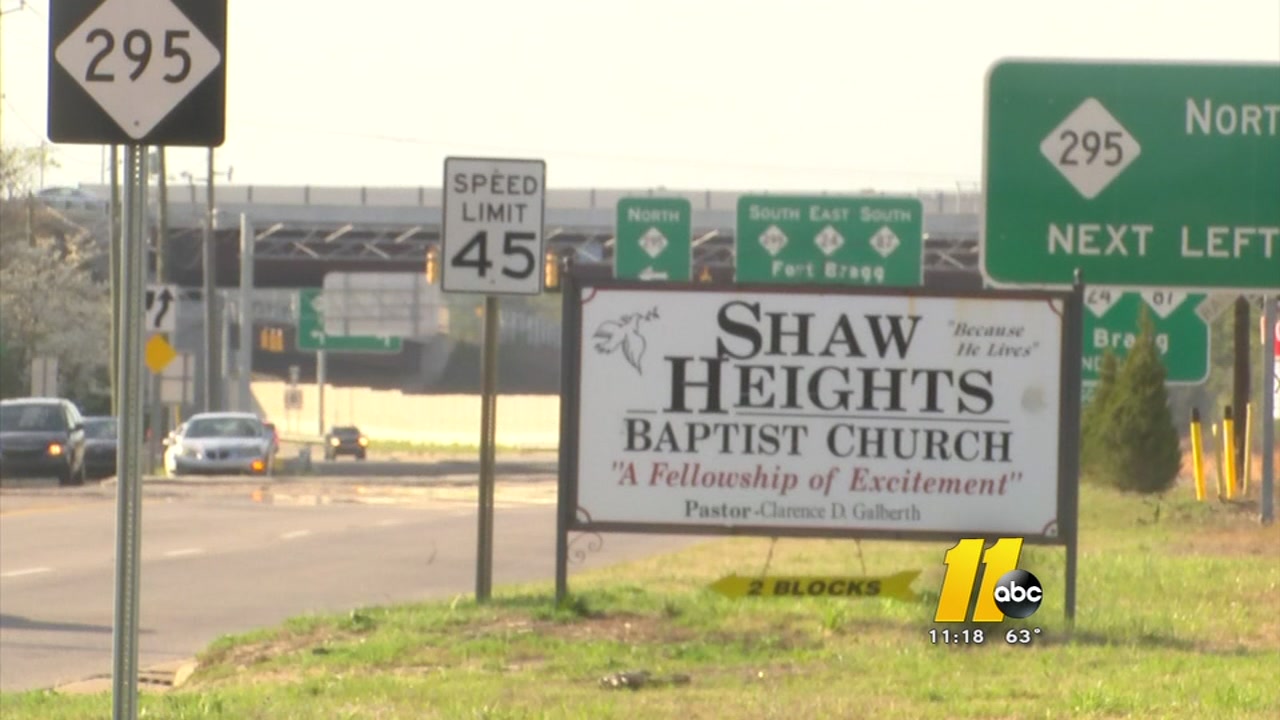
The Annexation of Shaw Heights: Part Deux

By: Andrew Porter

First, I want to thank everyone for their comments and feedback. It’s your feedback that makes part two possible. Second, I want to recognize the immutable fact that I am human and may not get everything 100% correct. With these two things in mind, it appears that Shaw Heights does not qualify for the impoverished, or distressed, area exceptions for annexation by petition. I want to thank Senator Kirk deViere for providing the statistics below:

Census Tracks 24.01 and 24.02 make up Shaw Heights.

Census Tract 24.01
In this area, there are 1,742 people for whom poverty is determined.
Of those, 670 are below the Federal poverty line (38.5%).
265 are children (<18) in poverty.

Census Tract 24.02
In this area, there are 3,598 people for whom poverty is determined.
Of those, 1,105 are below the Federal poverty line (30.7%).
356 are children (<18) in poverty.”

2012-2017 ACS (American Community Survey) – 5-year data released on December 6, 2018 by the Census Bureau

Based on the numbers provided by Senator deViere, Shaw Heights has an average poverty rate of 34.6%; a significant rate, but below the 51% threshold to meet the two exceptions. Moreover, the numbers provided do not distinguish the level of poverty, so we do not have a clear picture of how far Shaw Heights is from the threshold. In short, it appears that voluntary annexation is not the best option for Shaw Heights, however, does this mean Rep. Floyd’s bill is the best option? Again, it’s not.

Annexation by a Municipality

As I said in the previous post, involuntary annexation by the NCGA is the fastest and simplest way to annex, however, it bypasses the will of the people. Nevertheless, annexation by a municipality is quite the opposite. The power to annex by a municipality is granted by N.C. Gen. Stat. § 160A-58.52:

“The governing board of any municipality may extend the corporate limits of such municipality under the procedure set forth in this Part.”

The aforementioned procedure can found in N.C. Gen. Stat. § 160A-58.55. The procedure in order is:

  1. Resolution of Consideration – A resolution passed by the Council identifying the area to be annexed; good for 2 years.
  2. Notice of Resolution of Consideration – Resolution of Consideration is published in the newspaper and mailed to all real property owners in Shaw Heights.
  3. Resolution of Intent – At least ONE YEAR after the Resolution of Consideration, the Council can adopt a Resolution of Intent to annex, which authorizes…
  4. Public Informational Meeting, Public Hearing, Notice(s), and Other Governmental Processes – All the Government minutiae that makes annexation possible.
  5. Referendum – The residents of Shaw Heights vote FOR or AGAINST annexation at the next municipal election that is at least 45 days after the Resolution of Intent.

In addition to procedure, the area to be annexed must meet the requirements set forth under N.C. Gen. Stat. § 160A-58.53 and § 160A-58.54. There are several requirements that must be met, but for the sake of efficiency let’s say Shaw Heights meets them. I honestly believe it meets all the requirements, but this is a blog, not a law review article.

Have you done the math yet? Under this process, the earliest the residents of Shaw Heights can vote on annexation is at the 2021 municipal election. Nonetheless, this is the most democratic method of annexation. Annexation by a municipality respects the will of the people, although time consuming, and is the only way I can see Shaw Heights being annexed in the near future.

*Side note: The Council passed a resolution on April 10, 2017 calling for the annexation of Shaw Heights. If the resolution passed meets the description of the Resolution of Consideration, and the Council met the Notice requirements of N.C. Gen. Stat. § 160A-58.55, then it might be possible for the Council to pass a Resolution of Intent; placing the Referendum on November’s ballot.  

Annexation of Shaw Heights

By: Andrew Porter

Understanding the law is tough. I’ve spent the last three years studying it. However, it frustrates me to no end to witness a 7-term legislator misunderstand the law, then promulgate these misunderstandings to the masses. Moreover, our wonderful paper (it truly is a blessing to have a local paper) doesn’t bother to do their homework and correct the aforementioned statements of said legislator. Representative Elmer Floyd, the editors of the Fayetteville Observer, Mayor Colvin and members of the City Council, my words are for you. It’s my hope that you will learn that voluntary annexation of Shaw Heights is not only feasible, but the only real option of incorporating Shaw Heights into Fayetteville.

Image result for shaw heights cumberland county

Representative Floyd has introduced legislation to involuntarily annex Shaw Heights. You can read more about his legislation here: https://www.fayobserver.com/news/20190311/proposed-shaw-heights-annexation–bill-could-be-effective-june-30

Involuntary annexation by the NC General Assembly is the fastest and simplest way to annex, however, it bypasses the will of the people; whether they be renters or owners. I can’t speak for Rep. John Szoka, but he has opposed involuntary annexation in the past under similar premises. In short, it is highly unlikely Representative Floyd’s bill will pass; leaving only voluntary annexation as the only real option for Shaw Heights to be incorporation. However, Rep. Floyd doesn’t think voluntary annexation is a likely solution:

“The current law allows property owners and residents to petition the city for annexation. ‘It’s the whole community,’ Floyd said of the current petition process. ‘Renters would also have a say.’ But in reality, it’s not likely that any voluntarily annexation would come to fruition, he said. ‘It’s difficult because you would still have to find absentee landlords and all the (owners of) vacant properties, and all that may be multiple heirs,’ he said.'”

Fortunately for Shaw Heights, Rep. Floyd is wrong. I don’t think Rep. Floyd is intentionally misleading or malicious in his comments, but it seems that Rep. Floyd has mixed together two different parts of NC voluntary annexation law. So, lets see if we can untangle this mess by looking at the relevant parts of the statute:

§ 160A-31. Annexation by petition.

“Part (a): The governing board of any municipality may annex by ordinance any area contiguous to its boundaries upon presentation to the governing board of a petition signed by the owners of all the real property located within such area. The petition shall be signed by each owner of real property in the area and shall contain the address of each such owner.”

Part (a) is the traditional manner in which an area can be annexed. Under this part, every owner of real property in the area to be annexed would have to sign a petition requesting annexation. The city council would have to adopt the petition with a majority vote. Under part (a), Rep. Floyd’s points are accurate; it would be unlikely to track down every real property owner in Shaw Heights and have them sign the petition, but if we read a little further…

“Part (b1): Notwithstanding the provisions of subsections (a) and (b) of this section, if fifty-one percent (51%) of the households in an area petitioning for annexation pursuant to this section have incomes that are two hundred percent (200%) or less than the most recently published United States Census Bureau poverty thresholds, the governing board of any municipality shall annex by ordinance any area the population of which is no more than ten percent (10%) of that of the municipality and one-eighth of the aggregate external boundaries of which are contiguous to its boundaries, upon presentation to the governing board of a petition signed by the owners of at least seventy-five percent (75%) of the parcels of real property in that area.”

Generally, a petition must be signed by all real property owners. However, under the impoverished area exception, only 75% of the real property owners have to sign the petition. Shaw Heights may qualify for this exception if 51% of the households in Shaw Heights have incomes at or below 200% of the poverty line. Furthermore, under this petition, the City Council SHALL annex by ordinance; making annexation effective upon certification of the petition. But didn’t Rep. Floyd say something about renters….?

“Part (j): Using the procedures under this section, the governing board of any municipality may annex by ordinance any distressed area contiguous to its boundaries upon presentation to the governing board of a petition signed by at least one adult resident of at least two-thirds of the resident households located within such area. For purposes of this subsection, a “distressed area” is defined as an area in which at least fifty-one percent (51%) of the households in the area petitioning to be annexed have incomes that are two hundred percent (200%) or less than the most recently published United States Census Bureau poverty thresholds. The municipality may require reasonable proof that the petitioner in fact resides at the address indicated.”

The residents, renters included, of Shaw Heights may be able to submit a petition under the distressed area exception. Shaw Heights may qualify for this exception based on the aforementioned poverty in the area. To meet this exception, a petition must be signed by one adult resident from at least two-thirds (66%) of the resident households located within the area and reasonable proof of residency may be required. Therefore, renters would also have a say in whether the area is annexed. Moreover, the City Council would have to approve the measure.

In conclusion, there are three different ways to voluntarily annex Shaw Heights. A traditional voluntary annexation petition is unlikely, but I believe the Shaw Heights area qualifies to petition the Council under the impoverished area and distressed area exceptions. I believe the low threshold of the distressed area exception, 66% of residents, is the best way to achieve annexation. So, who wants to canvass Shaw Heights?

The “Free Parking isn’t Free” Fallacy

There’s a talking point being repeated by Fayetteville leaders who support paid parking downtown. It’s been parroted by Mayor Colvin and many on the city council. Former Mayor Tony Chavonne said it on a local radio show this morning, and it was applauded by the host as a “great argument.” It’s not, and here’s why:


“Free parking isn’t free” seems good at first because it tugs at your sense of fairness. The gist is this: The City (through taxpayers) spends money to service the free parking spaces and lots downtown. Not all Fayetteville taxpayers go downtown to park, and the City’s losing money. The people that actually use the parking spaces downtown should pay. Get some meters down there, stat!

Seems fair, right?

Here’s the glaring weakness: You can make the same argument about any public expenditure that ever happened!

Seriously, name any public project or amentity that you won’t personally use and shoot it down with the arrows of selfishness and thrift.

Try it for yourself:

“Free ____public amenity I haven’t used lately_____ isn’t free!!!”

Image result for parking attendant downtown fayetteville

It seems good at first, but you’ll quickly feel like a miser. Why? Because we don’t privatize everything in our society. If we did, we wouldn’t need government in the first place. There is such a thing as the “common good,” even when the entire common isn’t participating.

We’ll start with a basic example. “Free education isn’t free!!!” Did you hear that kids!? Now, hand over your lunch money!! We have to pay for a new parking lot for the buses that got you to school.

Too extreme? Say you’re a father of two. A new elementary school is being built in your neighborhood and will be finished the year your youngest begins middle school. Does the fact that you and yours won’t use the new school make it any less worthy? Should those kids and those parents have to pay to build the school that they will be using? No, of course not. Why? Long ago, we made a policy decision to provide free education for all our youth, emphasis on “our.”

What about the new senior center that’s being built, or the splash pads that went up across Fayetteville. Unless you have kids or you’re getting old, you probably won’t use these city amenities. Should we charge the people that do and ask for our tax dollars back? No, we value the quality of life of our children and our elderly. Again, emphasis on “our,” and please do not yell “Free splash pads aren’t free!!!” to kids at Honeycutt Park this summer.

Now, let’s get specific to transportation:

I’ll never use the brand new bus station downtown that was paid for with 12.6 million in state and federal funds. Should we require that 12.6 million back from the bus riders of Fayetteville in increased fees? No, that won’t happen. Why? We’ve made a policy decision to provide affordable transportation for members of our community that need it.

I’m done tugging at your conscience, so maybe the numbers will help persuade you:

Here’s the parking breakdown from the City’s 2018-2019 Budget:

You can see that in the past few years, we’re bringing in a quarter million dollars in parking fees and tickets, but we’re spending more than that, forcing “interfund transfers” of around $100,000 to fill the hole. In short, the city’s “losing” about $100,000 a year in parking.

I honestly thought it was more than that after listening to our City talking-heads. Maybe my numbers are wrong. Feel feel to correct me.

Is all of this debate over a meager $100,000 in a city budget with expenditures of $215,369,370. If so, our so-called “parking loss” is 0.046% of our budget. Is change really needed?

Downtown Priorities

Remember, the City is building a 14.7 million dollar (and rising) parking deck downtown that the public won’t get to use. The primary purpose of the deck is to “service the private development” around it:

The contract for the deck includes a development fee of $575,000 for Prince Charles Holdings, who will get to use 90% of the deck “at cost.” That’s enough money to keep free parking downtown and cover the entire budget shortfall for the next five years.

Instead, the City of Fayetteville is going to “leverage” a self-created parking shortage surrounding the stadium downtown. Get ready to pay when you go to a baseball game, try to grab a sandwich, or shop at a local boutique.

Free parking isn’t free? Neither is a City government that’s creating a false crisis in order to make money off its citizens.

Thanks for reading. Next time I’m charging you.

Prince Charles Holdings Under Scrutiny

The News and Observer’s Dan Kane, an investigative journalist that gained notoriety with his coverage of the UNC-Football/Academic Scandal, has turned his compass South. He’s begun digging into Prince Charles Holdings, the “business partner” of the City of Fayetteville in its downtown development project. Read Kane’s full article with this link:

UNC audit revealed spending problems, but details remain secret

Related image
“Project Home Run”

The focus of Kane’s piece is two former UNC School of Government employees, Michael Lemanski and Jordan Jones. Each worked at the school’s Development Finance Initiative (DFI) before leaving to make money in the world of private development.

Fayetteville has been on their radar for some time:


The most prominent example is Fayetteville, which in May 2014 paid DFI $50,000 to review three areas city officials sought to redevelop. One was a residential area, the second the dilapidated Prince Charles Hotel in downtown and the third a commercial area near the Airborne and Special Operations Museum. The city envisioned landing a minor league baseball park on the third site.

About a month after the contract’s completion date, Lemanski joined Prince Charles Holdings, a group redeveloping the vacant hotel into apartments. Jordan Jones, a DFI employee who had also worked on the Fayetteville project, is also working for the hotel group.

In 2016, the city shifted the proposed ballpark next to the hotel, as part of a much larger redevelopment that includes a parking deck and a new hotel. The redevelopment included the city purchasing for $2.5 million in 2017 a parcel from Prince Charles Holdings. The business had bought the parcel for $2.07 million two years earlier.

Apparently, the Fayetteville Observer investigated the potential conflict of interest but dropped the story when UNC would not provide requested documents:


In early 2018, Monica Vendituoli, then a reporter for The Fayetteville Observer, inquired about Lemanski and Jones’ work for DFI and the Prince Charles group. In an email to UNC, she raised concerns that their dual roles had created a conflict of interest and sought related records.


UNC did not provide her a copy of the audit. UNC gave her a statement that said some details regarding potential conflicts of interest were “confidential personnel file information” that couldn’t be disclosed.

What it means…

Readers of this site know I’ve been critical of the parking deck deal with Prince Charles Holdings for well over a year. I don’t believe it is a good allocation of tax payer resources, and it arguably violates the public purpose requirement of the North Carolina Constitution. In short, it’s an economic windfall for Prince Charles Holdings. But should we be surprised??? These guys literally wrote the book on how to do these deals. Of course they’re going to come out on top.

Today, the massive crane kept lifting steel in the air as construction continued downtown. The stadium should be done in a few months with the parking deck to follow. We seem to be stuck in this deal, despite the cost overruns. It’s going to happen.

In the last analysis, it’s a sad day for the City of Fayetteville when our downtown “business partners” are being exposed in “sunshine week” at the News and Observer.

Play Ball!!!